
For the ‘Methods of Cataloguing’ project prompt, I chose the preface of Michel Foucault’s The Order of Things: An Archaeology of the Human Sciences [1] as a text to use for the ‘Inventory’ method. I selected this text because I found his views on humanity’s historical desire for order and cataloguing very insightful, and it led me to consider how we’ve decided which systems are useful and which are redundant, and what kind of system I would use to re-organise this text.
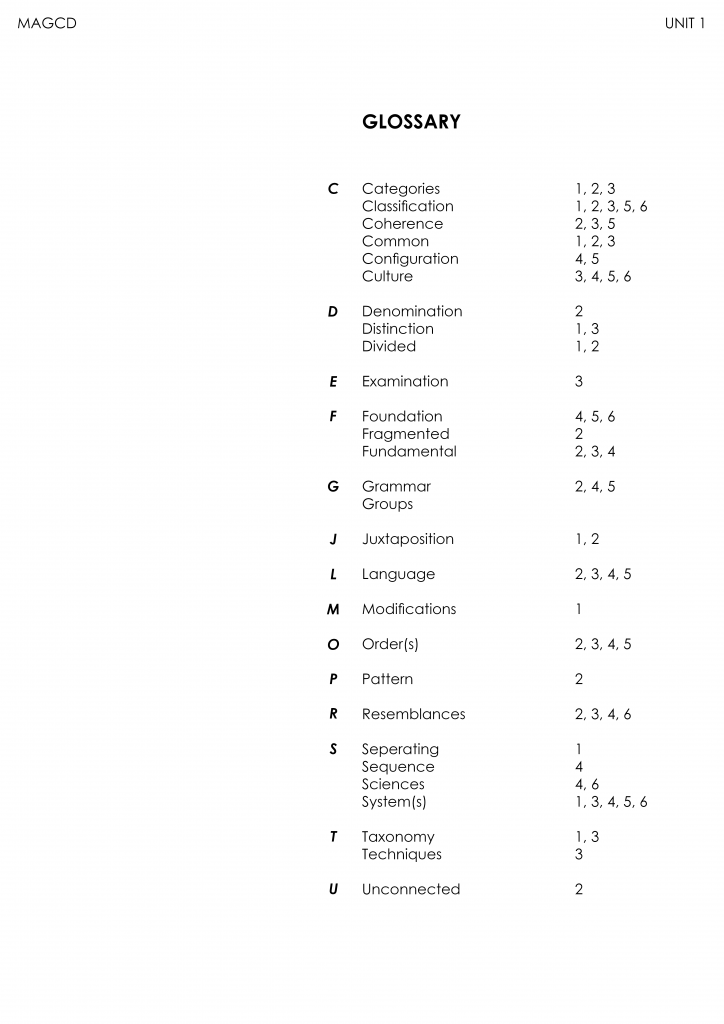
Due to the academic nature of the book, I decided that I would create a glossary which could provide information on where to find references to key terms throughout the six page PDF document. I believed that this would be an appropriate method because Michal Foucault’s book, this segment in particular, read to me like a specialty piece of information from the technical language he used. This could suggest that the demographic of readers have an interest in this subject in particular, and could find use in a system like a glossary.
I also chose to create a glossary because since beginning this project of cataloguing methods, I have grown aware of a particular language used to explain the process of categorising items, such as ‘grammar’, ‘classification’ and ‘sequences’. These terms are synonymous with creating order because they’re also recognised identification methods that we use to aid our ways of cataloguing, and help us to recognise what is relative and what is uncomparable.
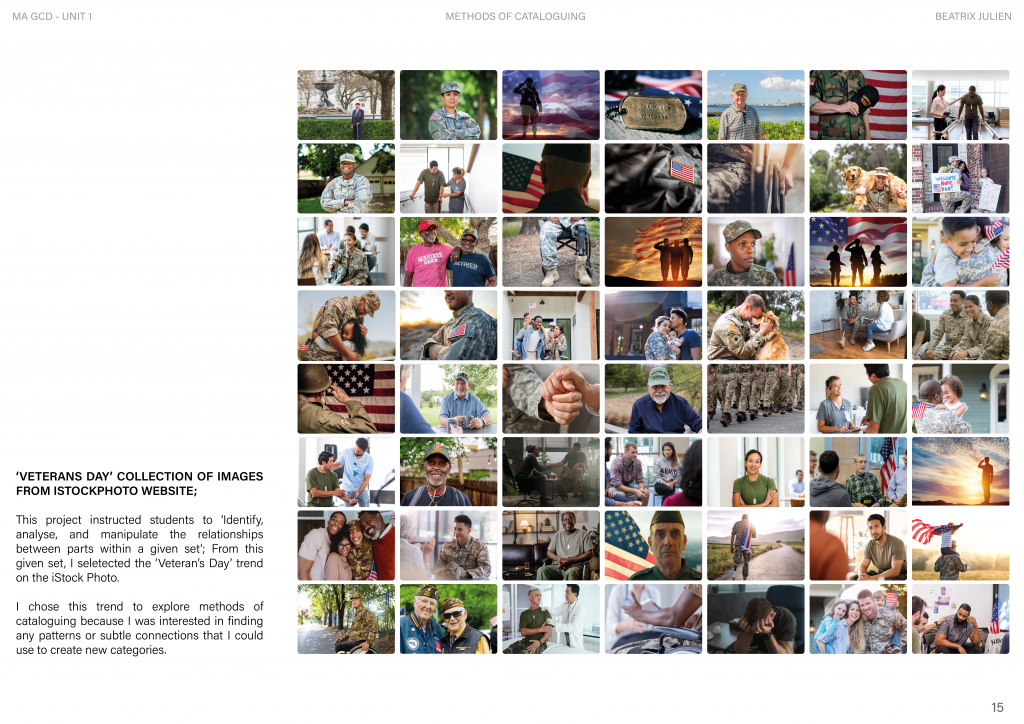
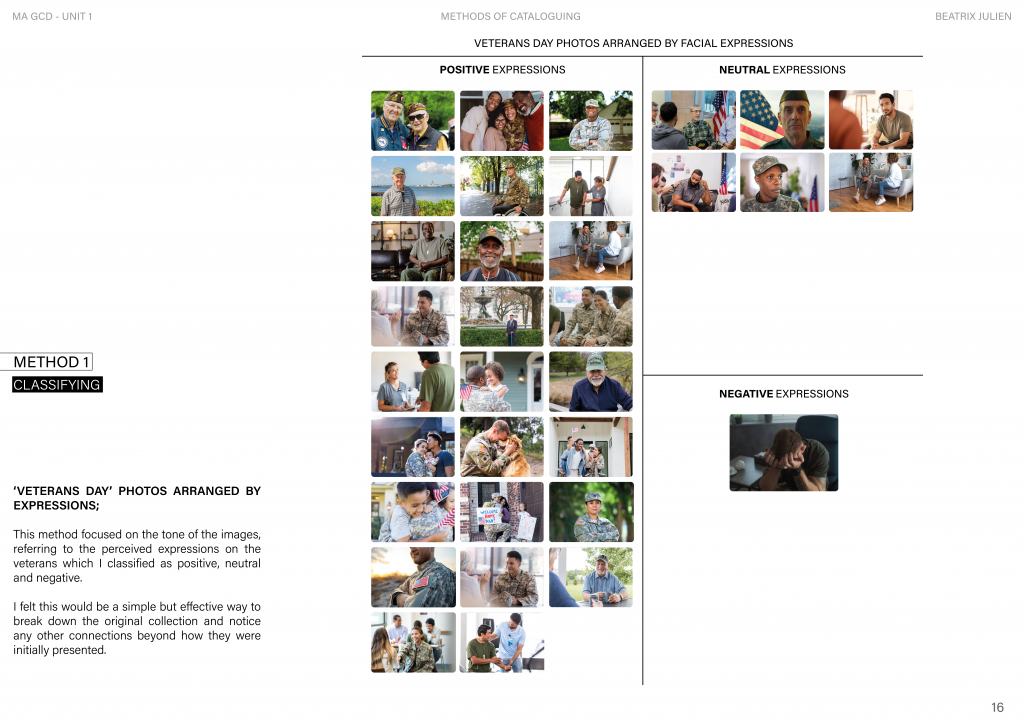
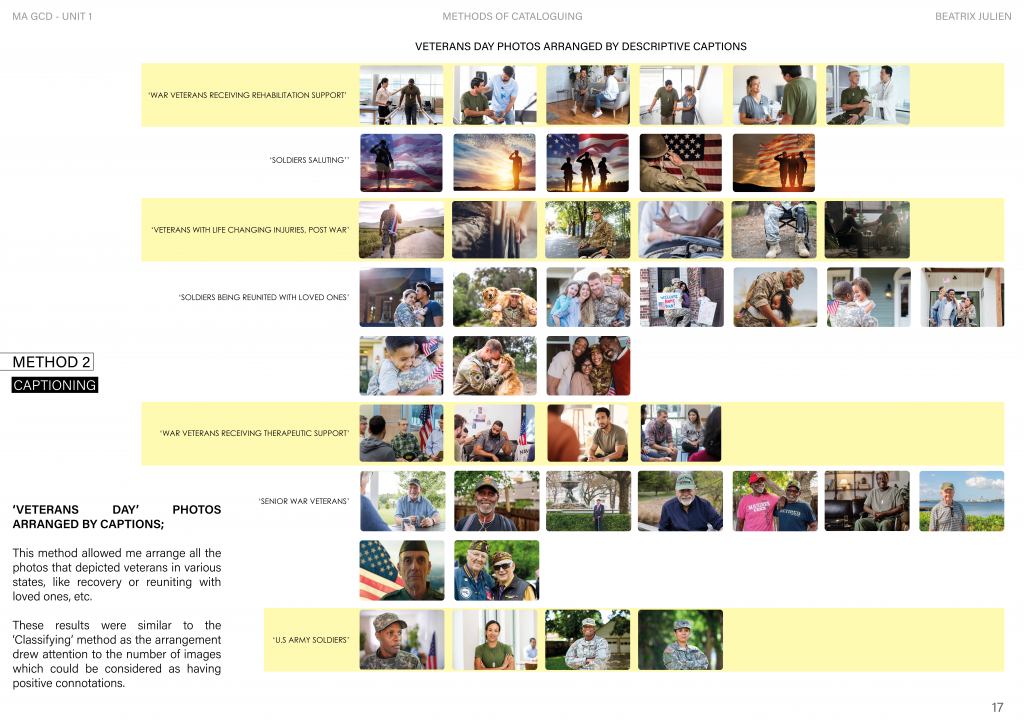
This project has required me to re-evaluate my initial thoughts surrounding cataloguing; It was something that I considered to be fairly straightforward and no more than a means for reference, however, after analysing examples and attempting to arrange my own catalogues, I understand that it can be a complex process which often needs to translate well. A thoughtfully arranged catalogue is contextual, has a clear purpose, and is presented in an appropriate format which corresponds with the topic.
[1] Foucault, M. (1966). The Order of things: an Archaeology of the Human Sciences. London: Routledge.