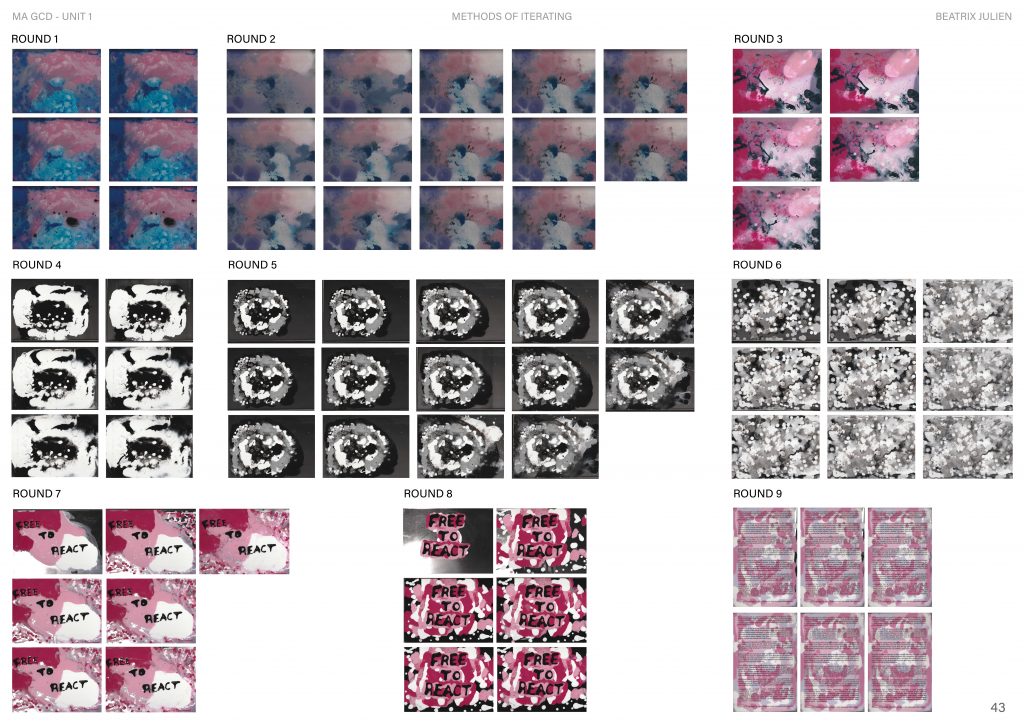
For this project, I looked at ways in which I could structure a video essay tracking my study of language through projects 6 and 7.
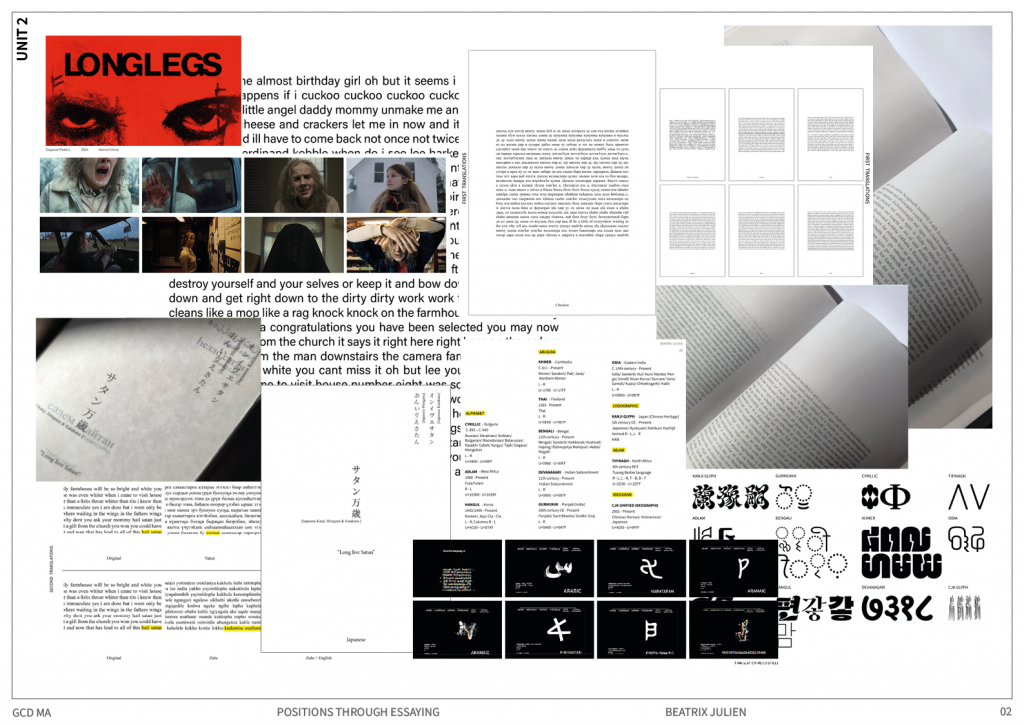
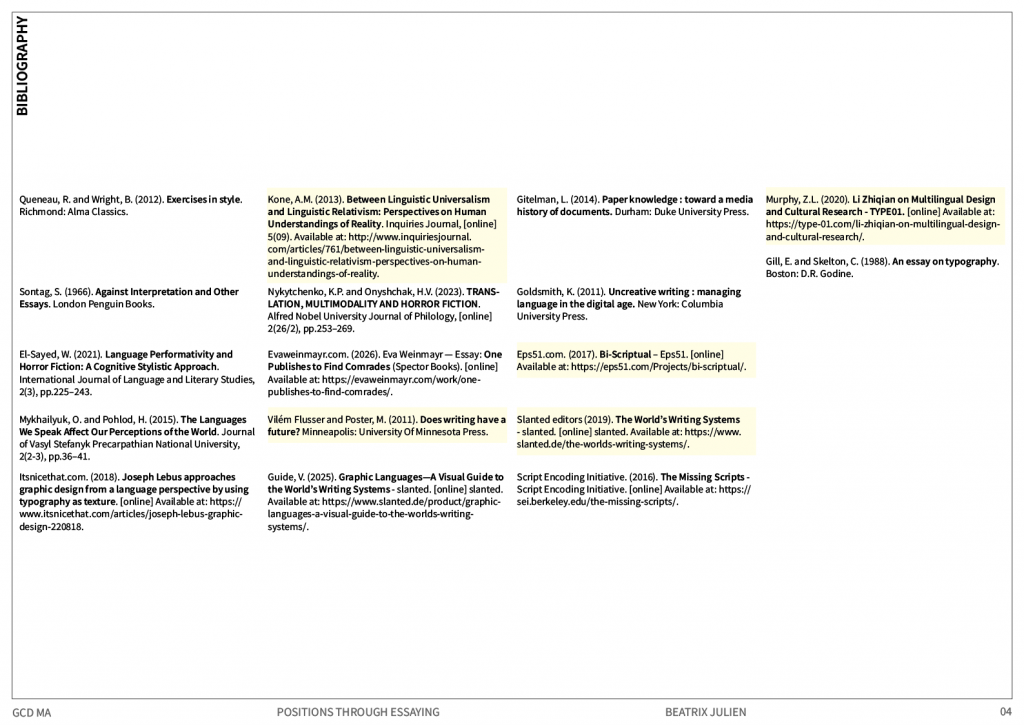
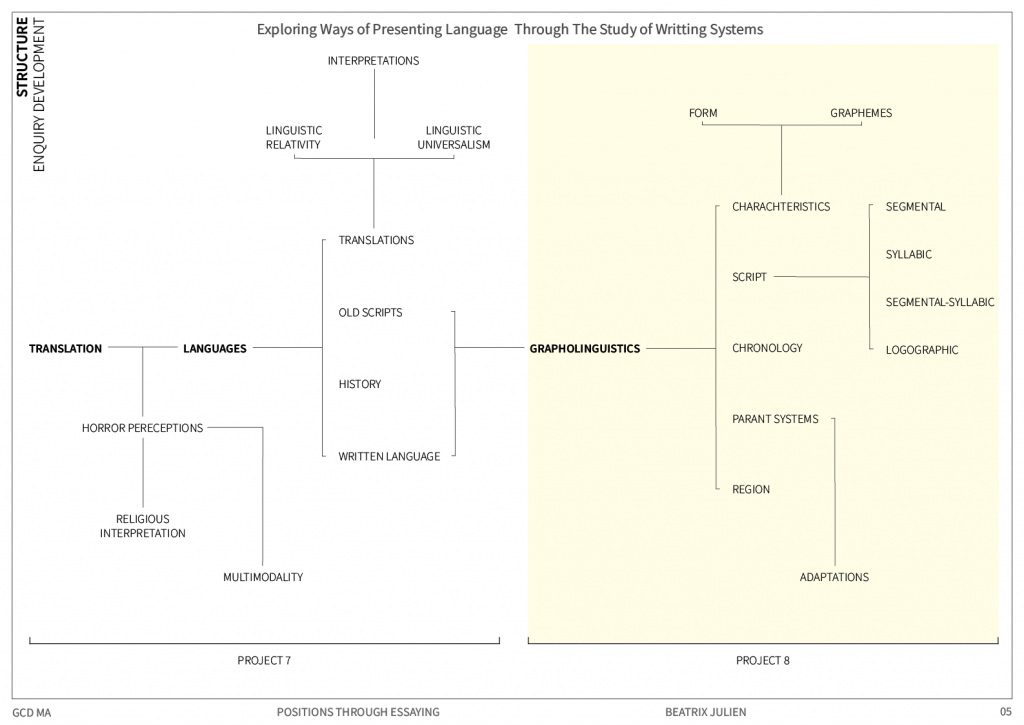
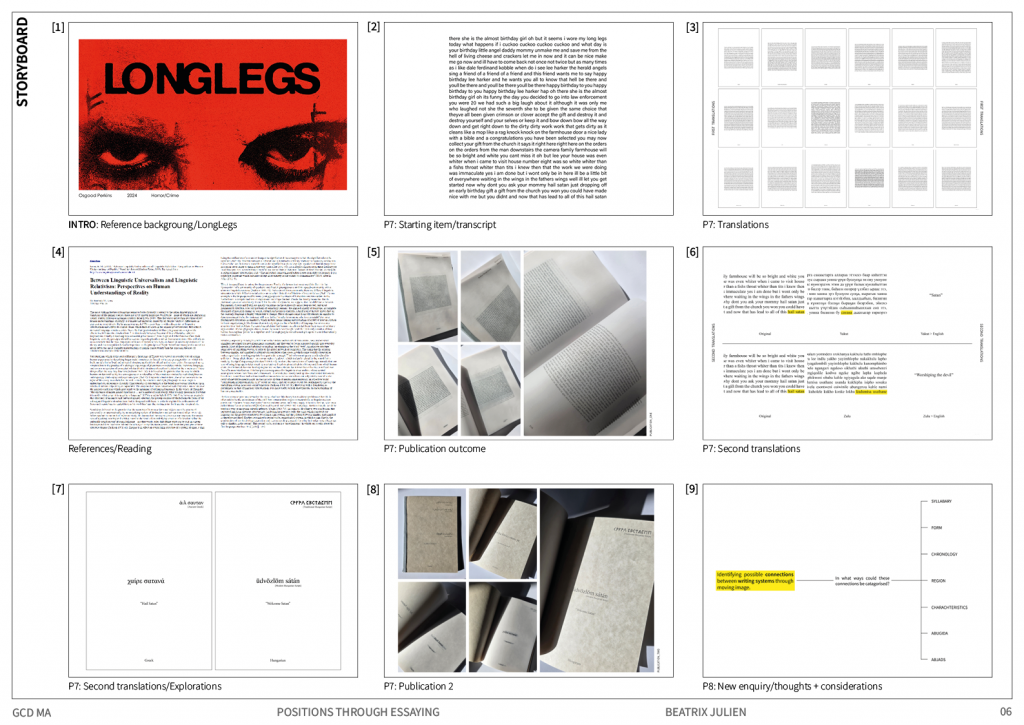
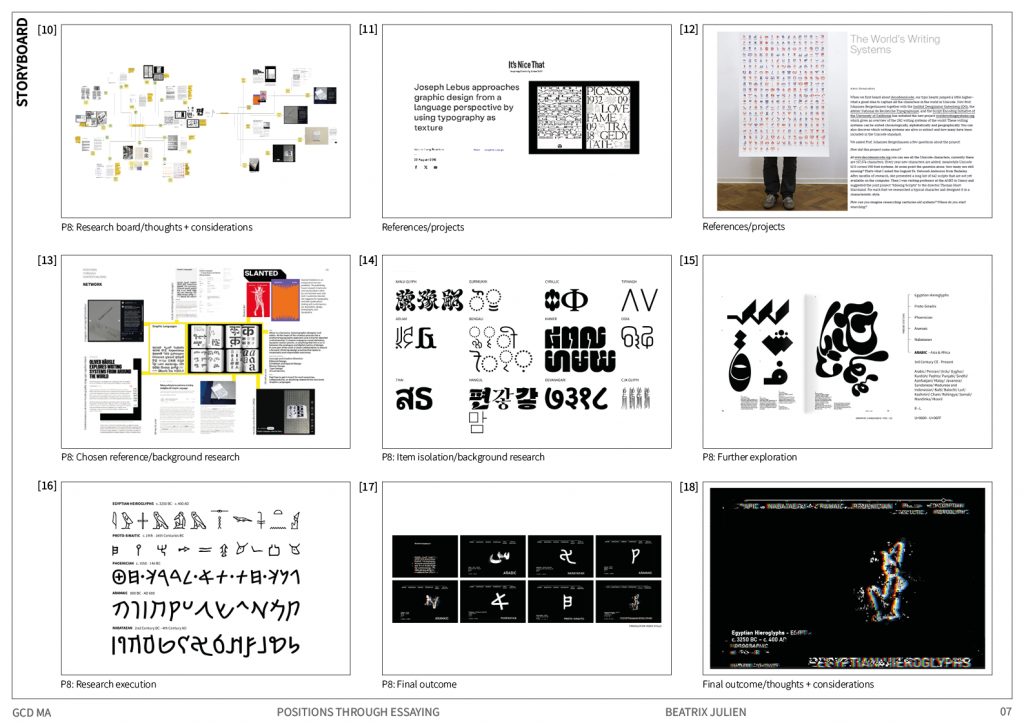
Link: vimeo.com/1197181552
For this project, I looked at ways in which I could structure a video essay tracking my study of language through projects 6 and 7.
Link: vimeo.com/1197181552
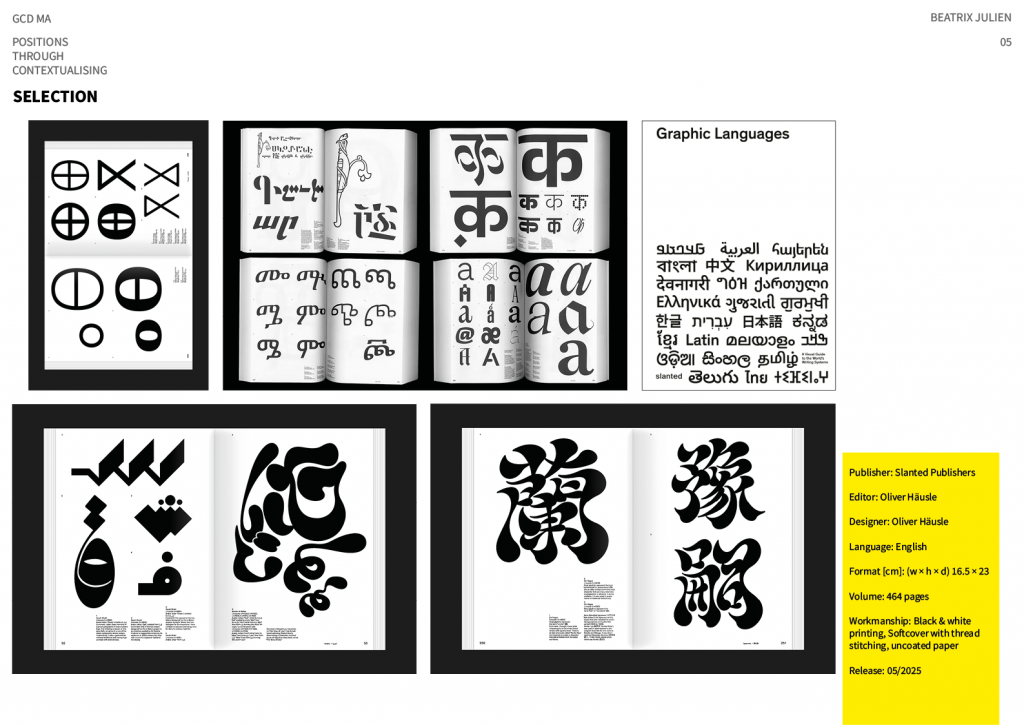
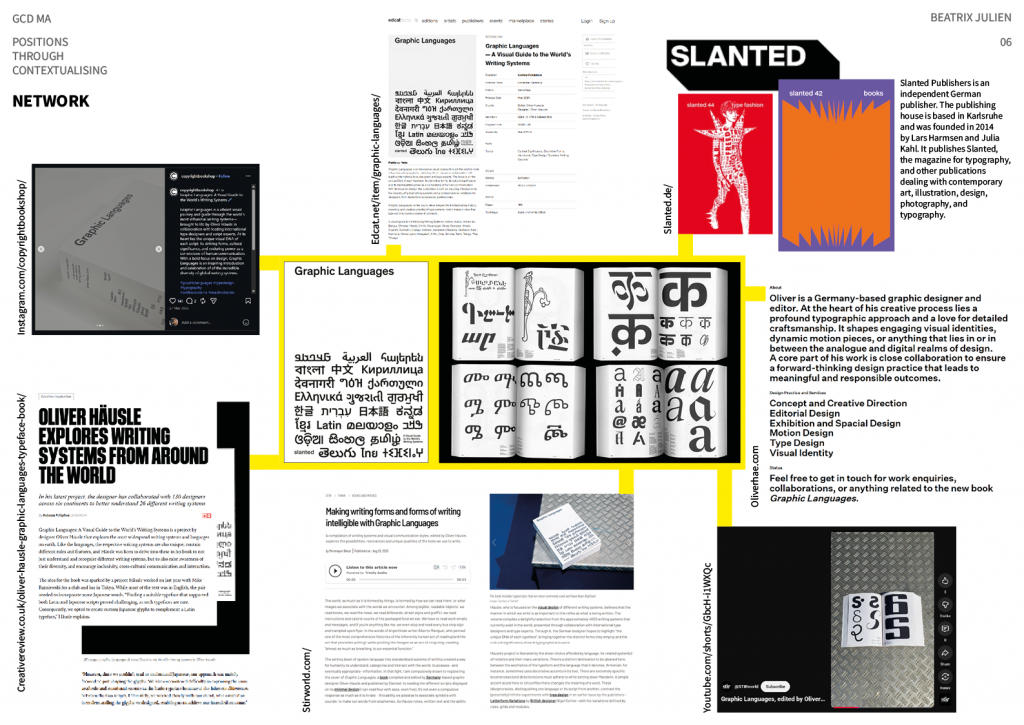
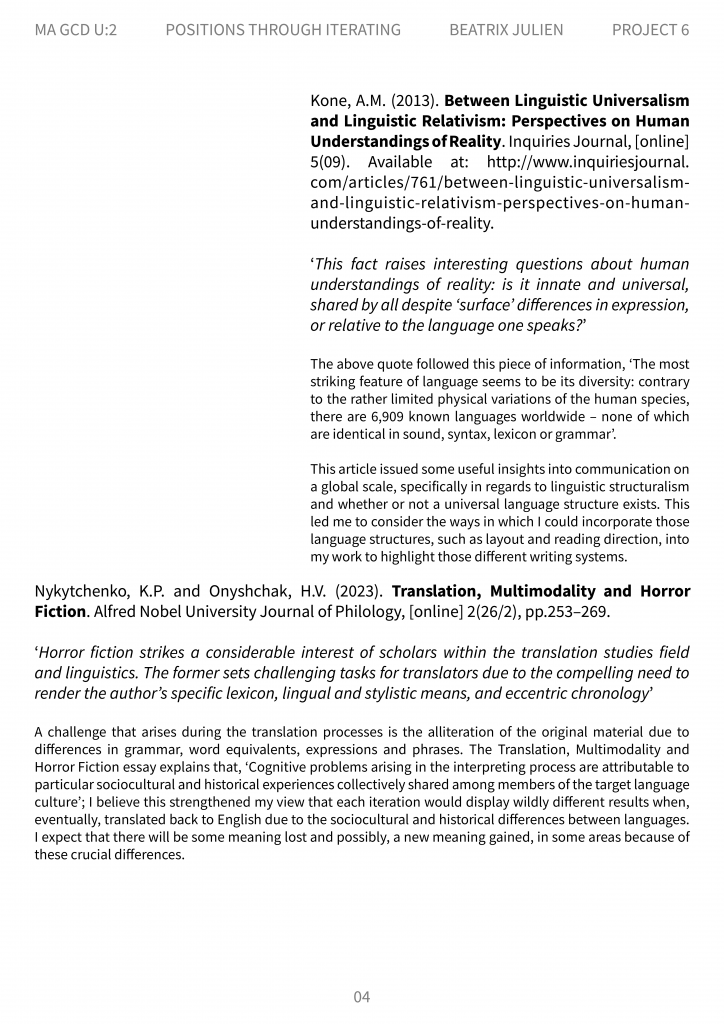
This project saw the exploration of possible connections between writing systems, with the outcome displayed through moving images.
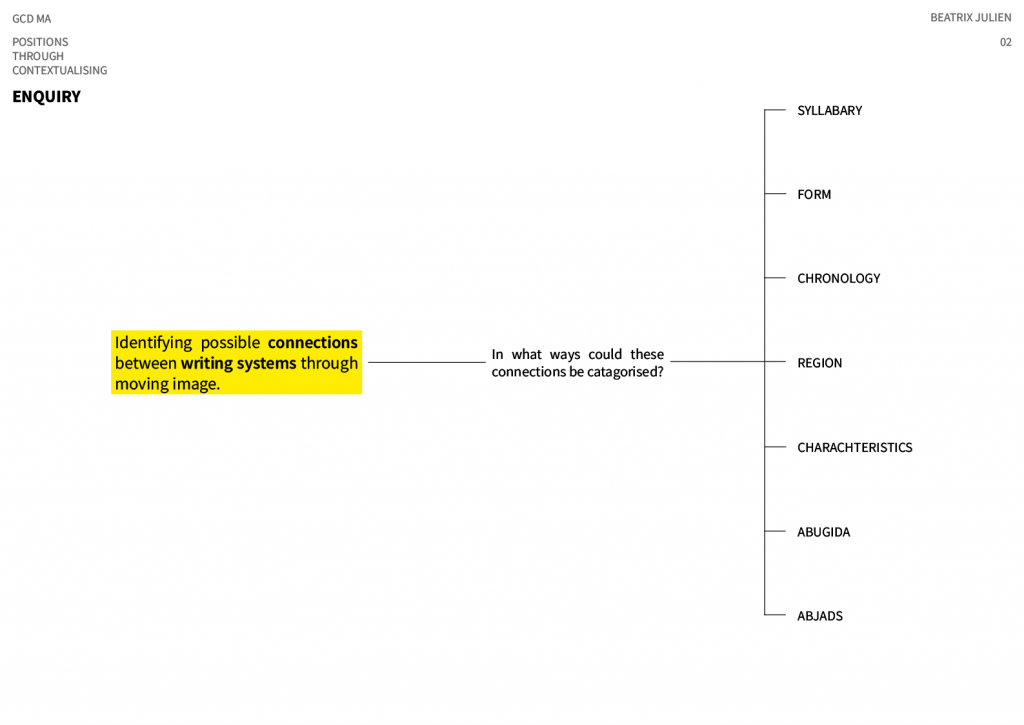
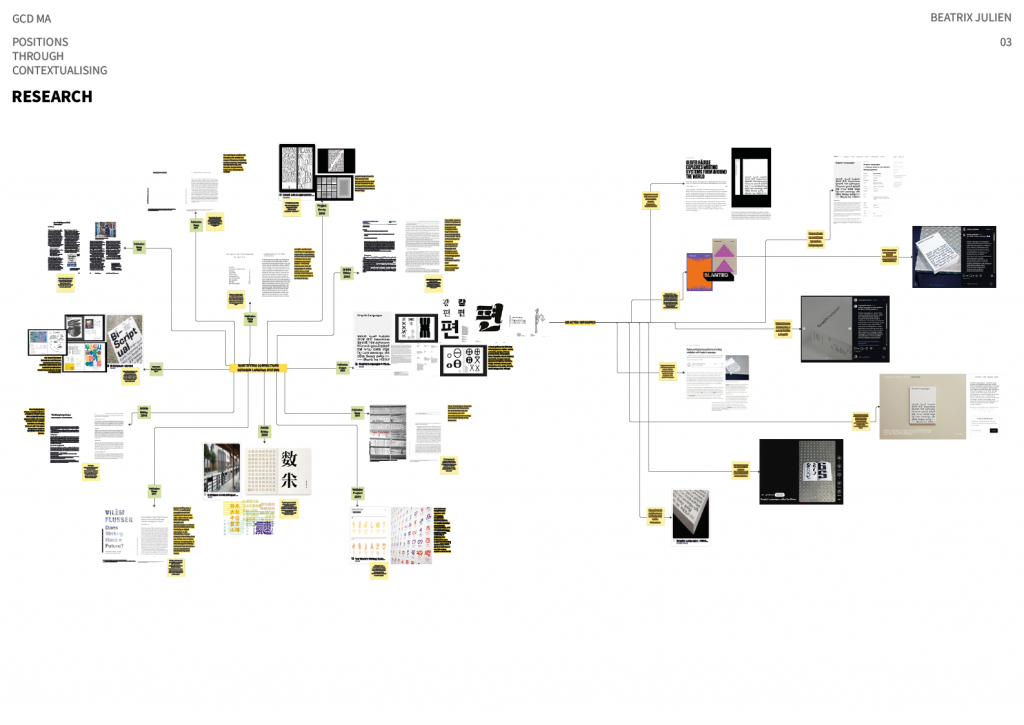
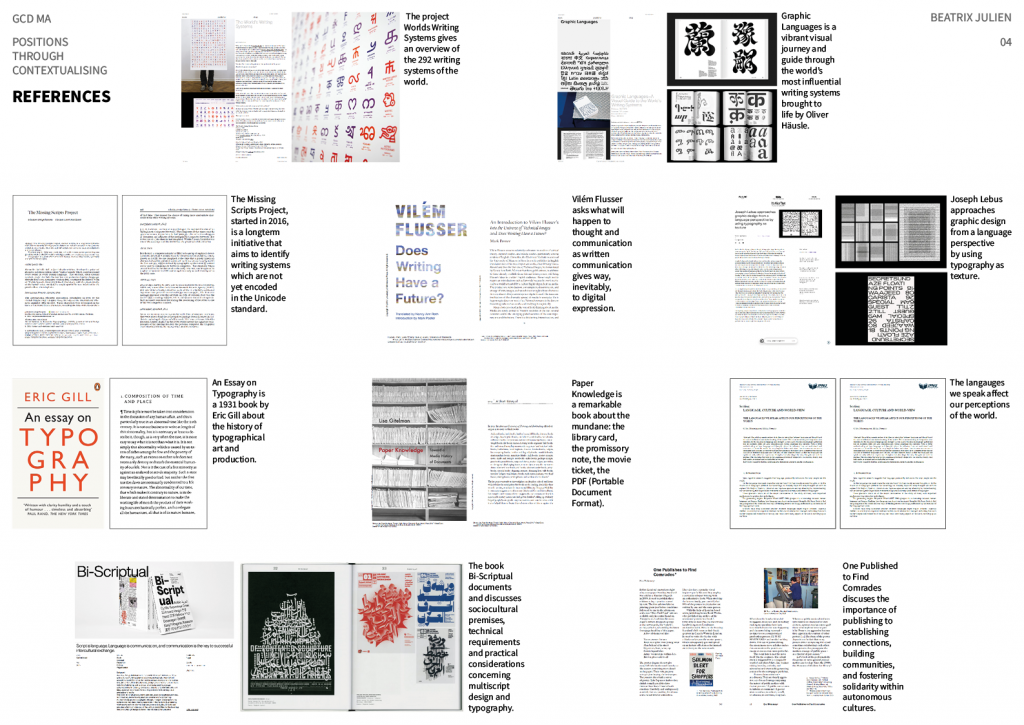
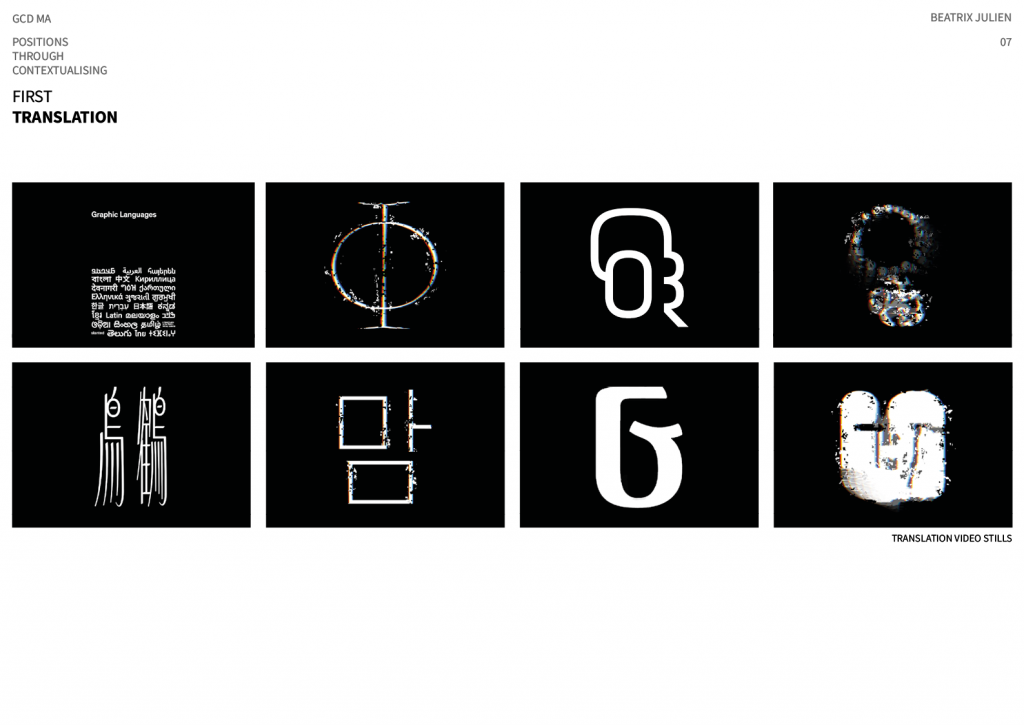
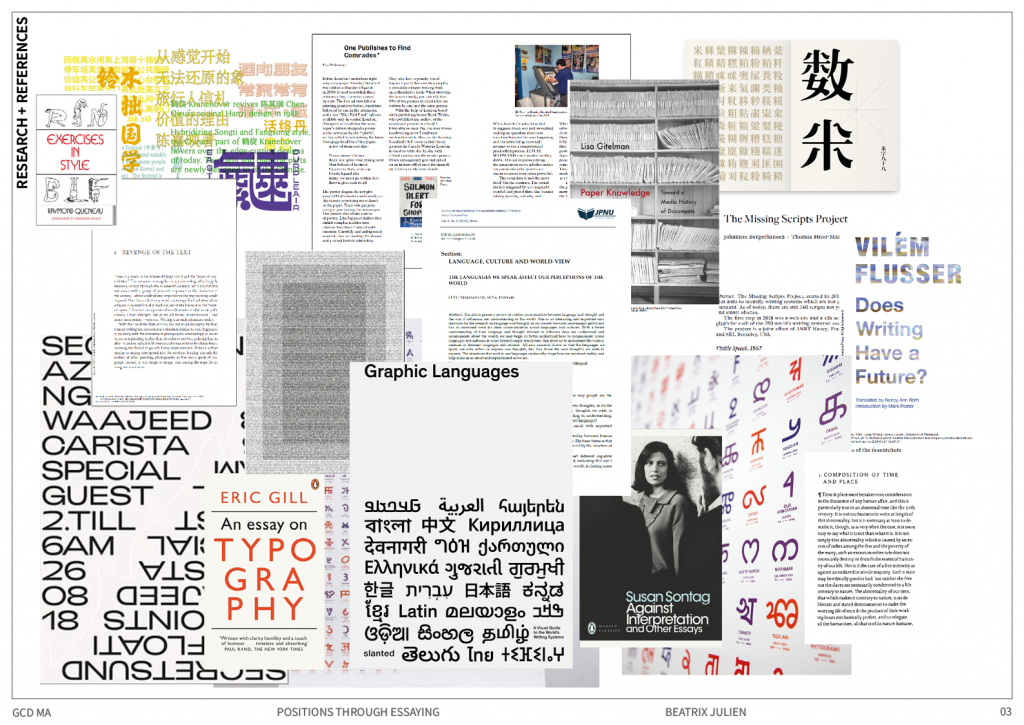
Upon recieving feedback each week, I looked at further ways that I could identify connections between writing systems, which involved catagorising through script type and chronological order.
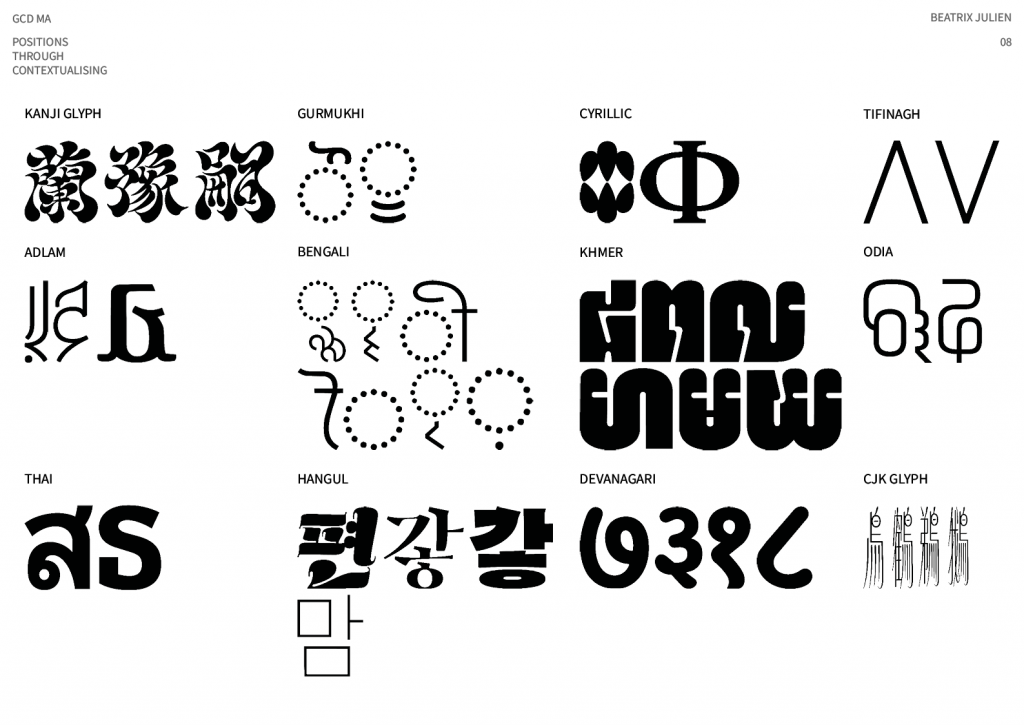
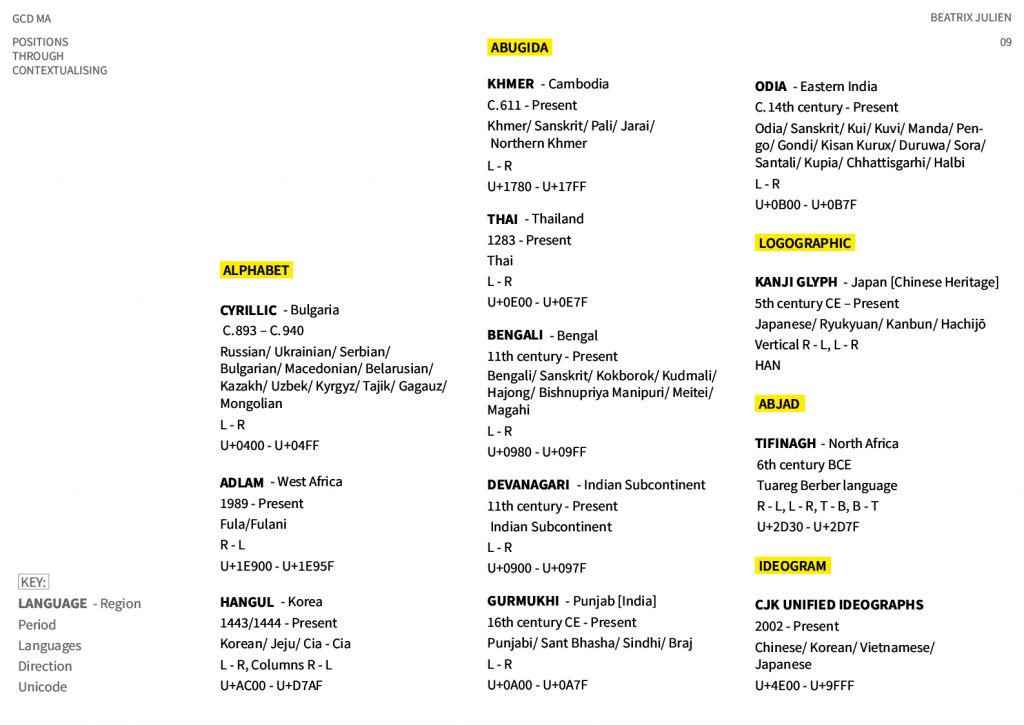
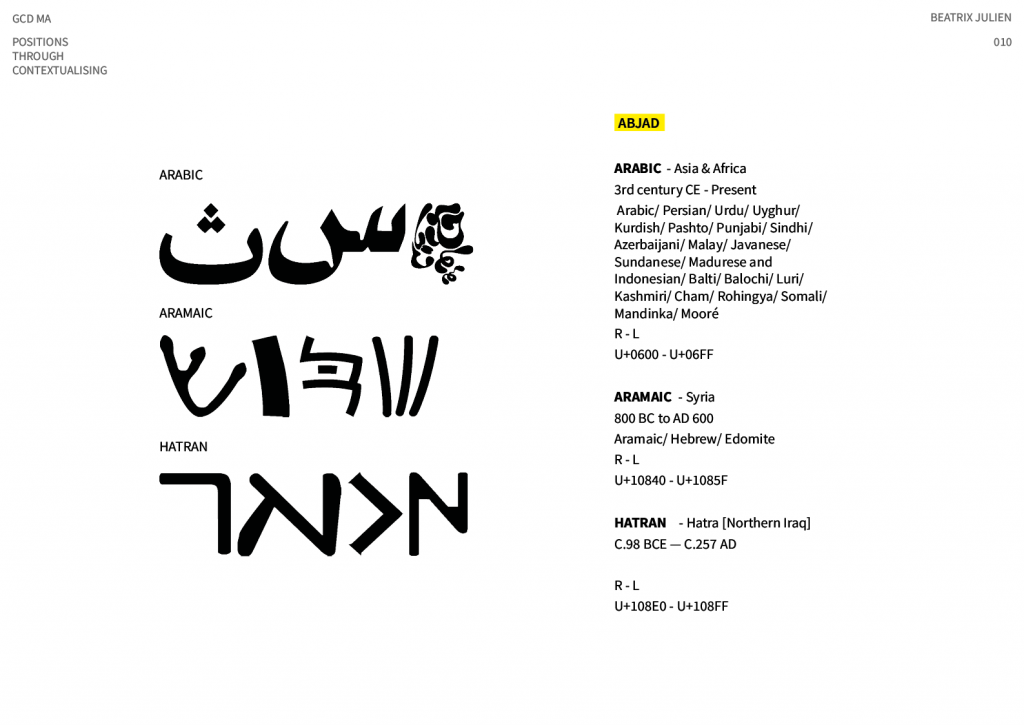
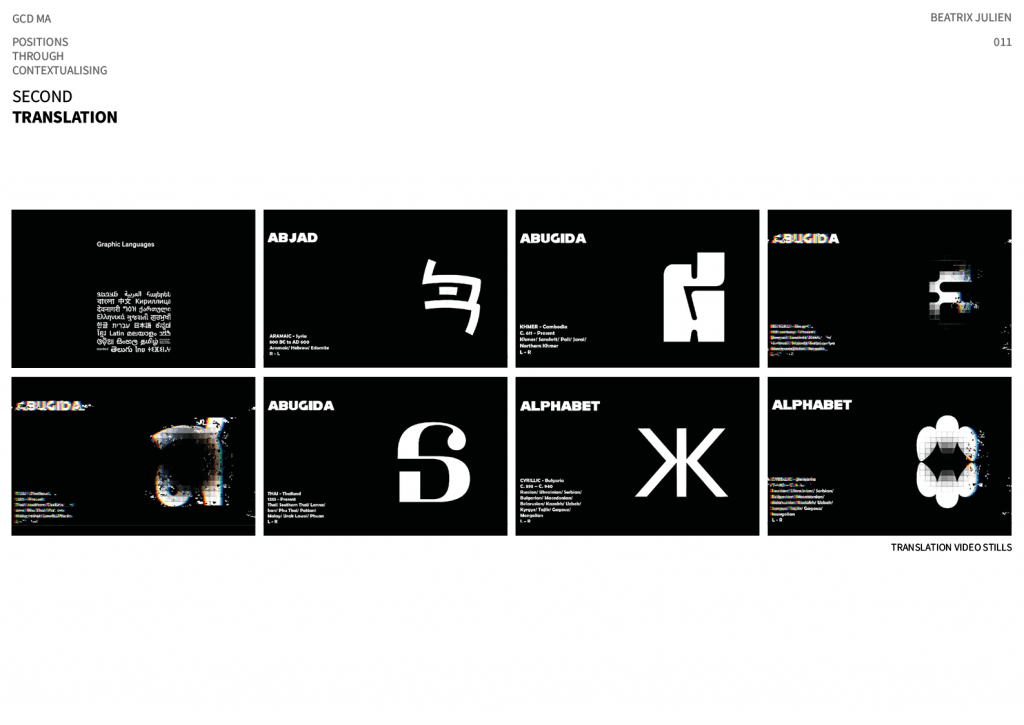
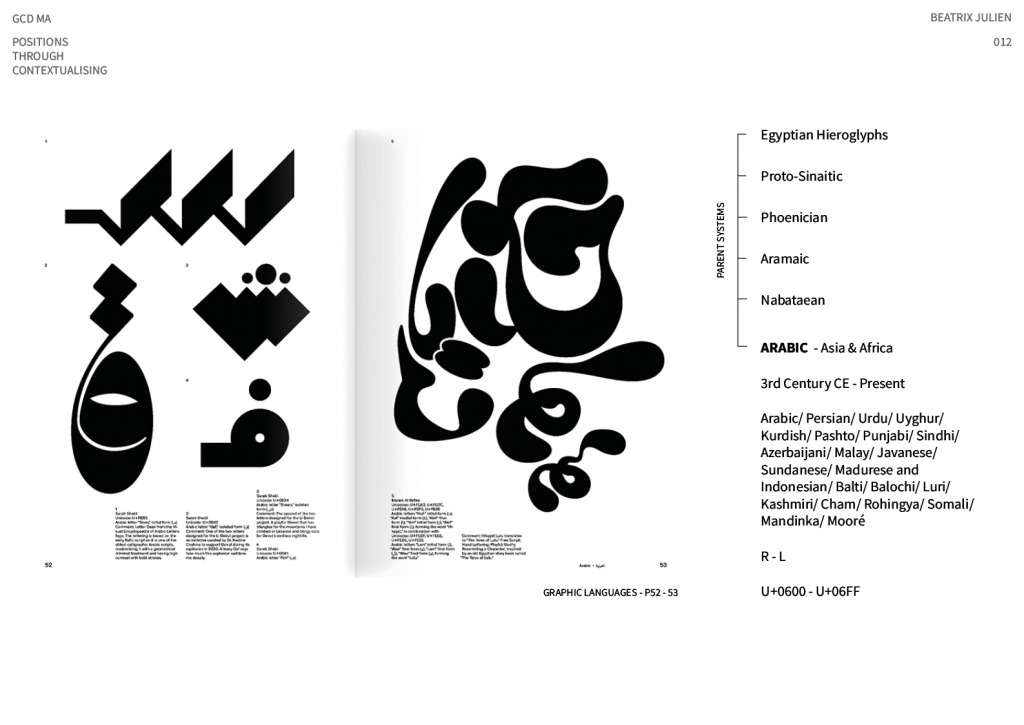
The third translation involved looking at one particular writing systems parent system and attempting to identify any indications of the previous systems reflected in the current system.
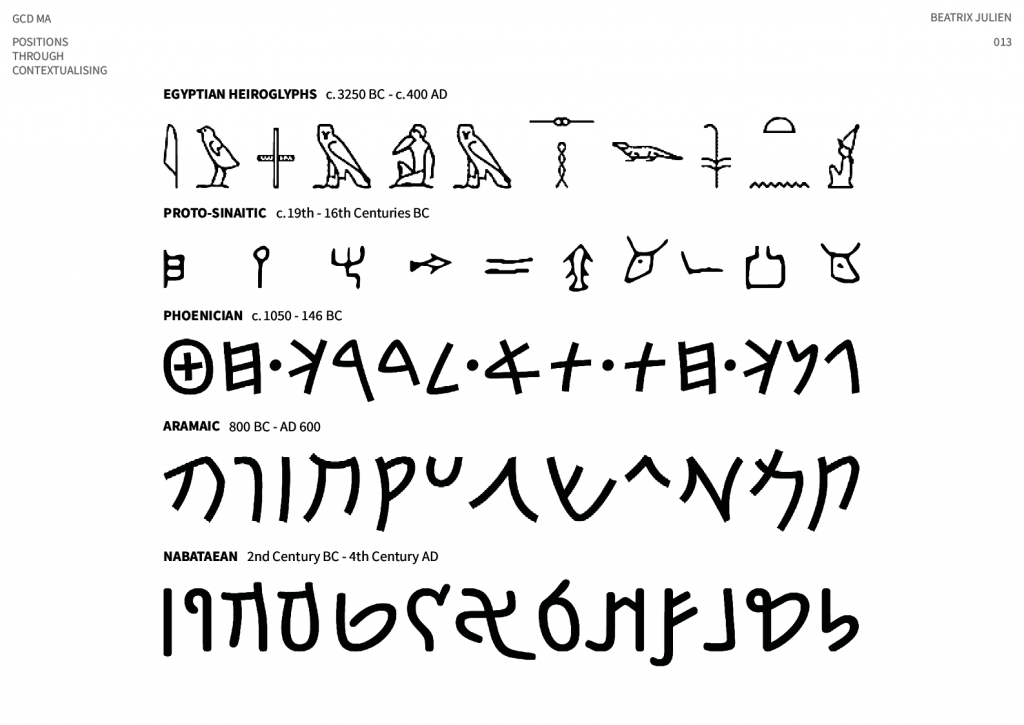
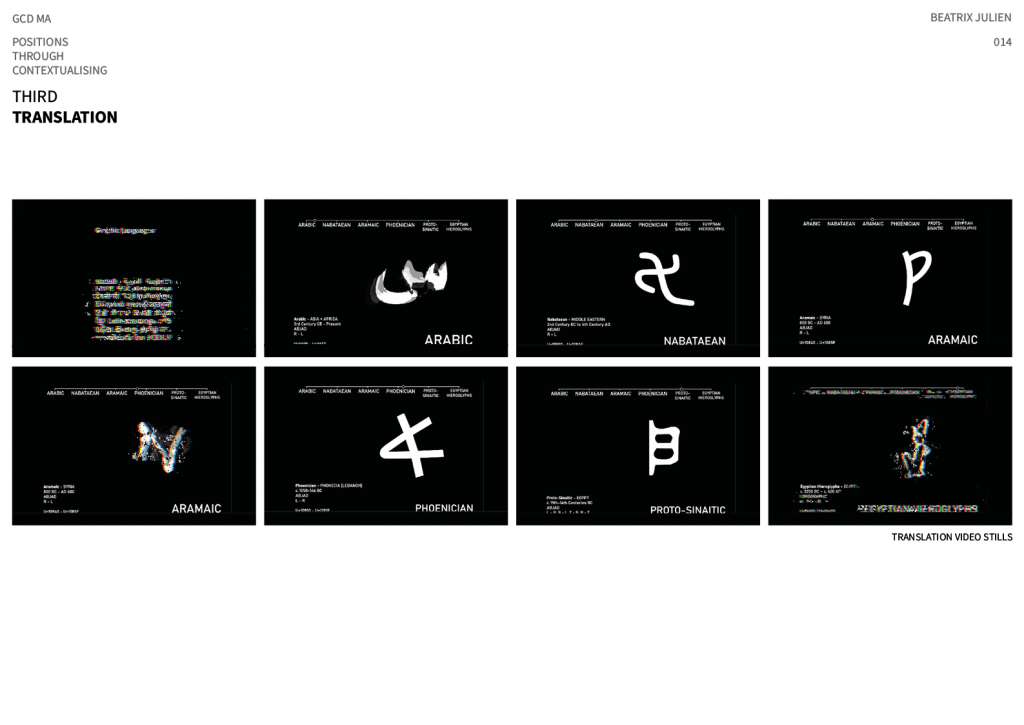
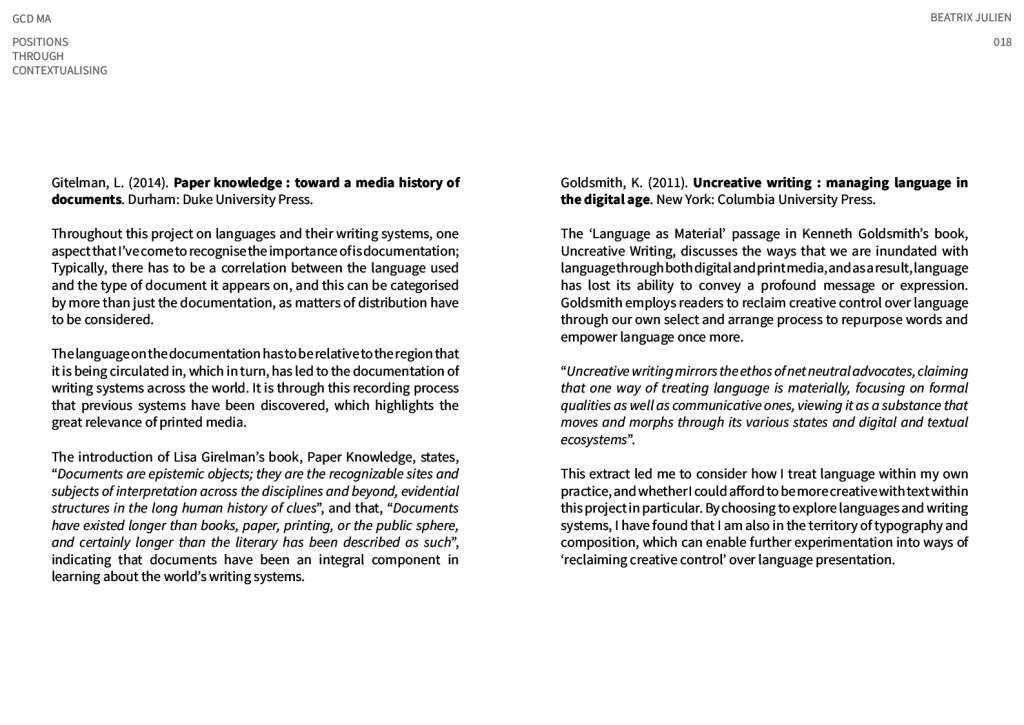
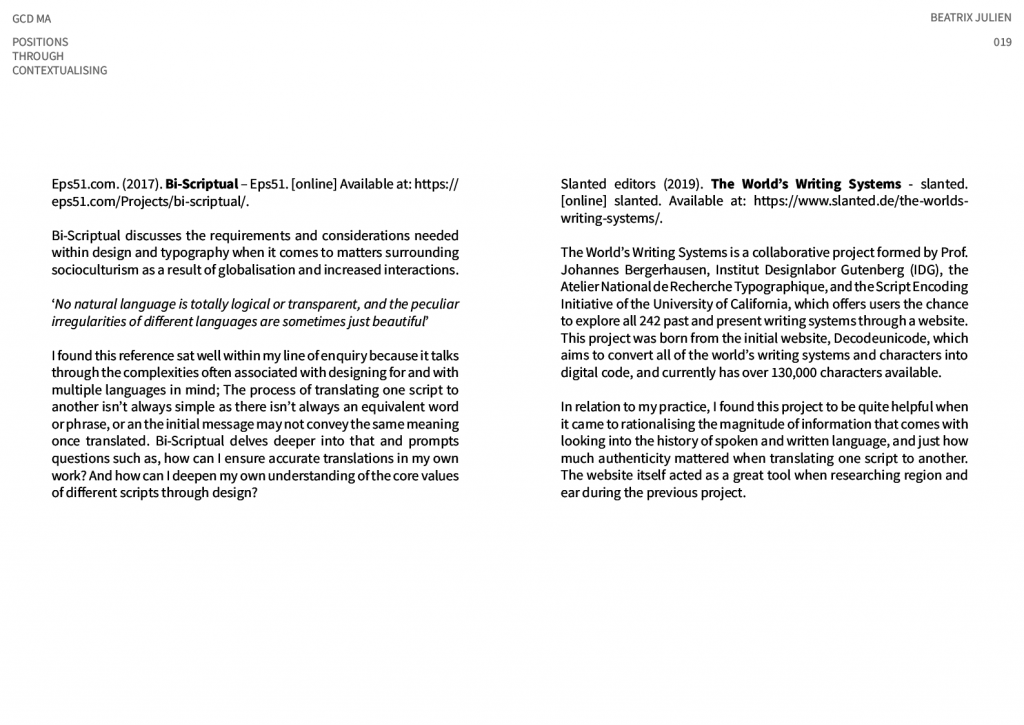
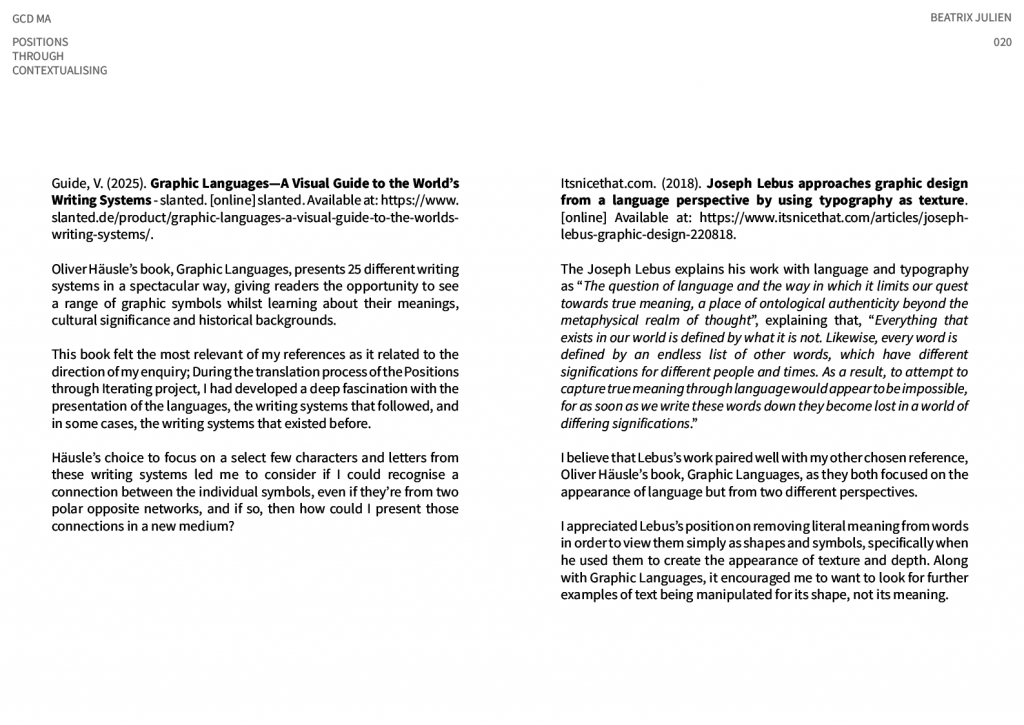
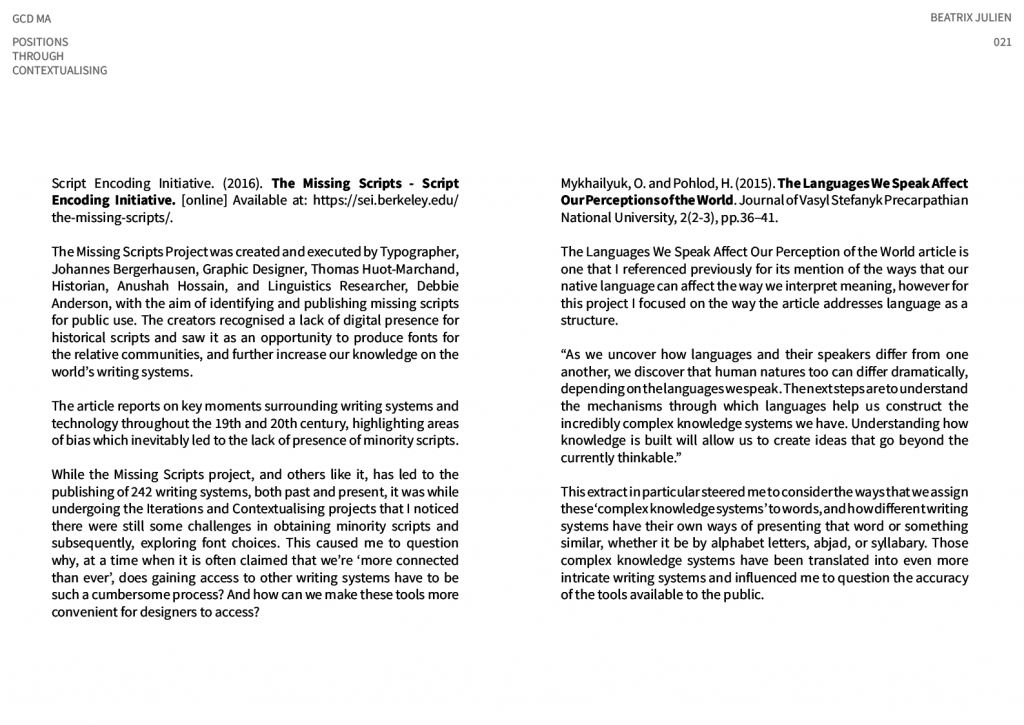
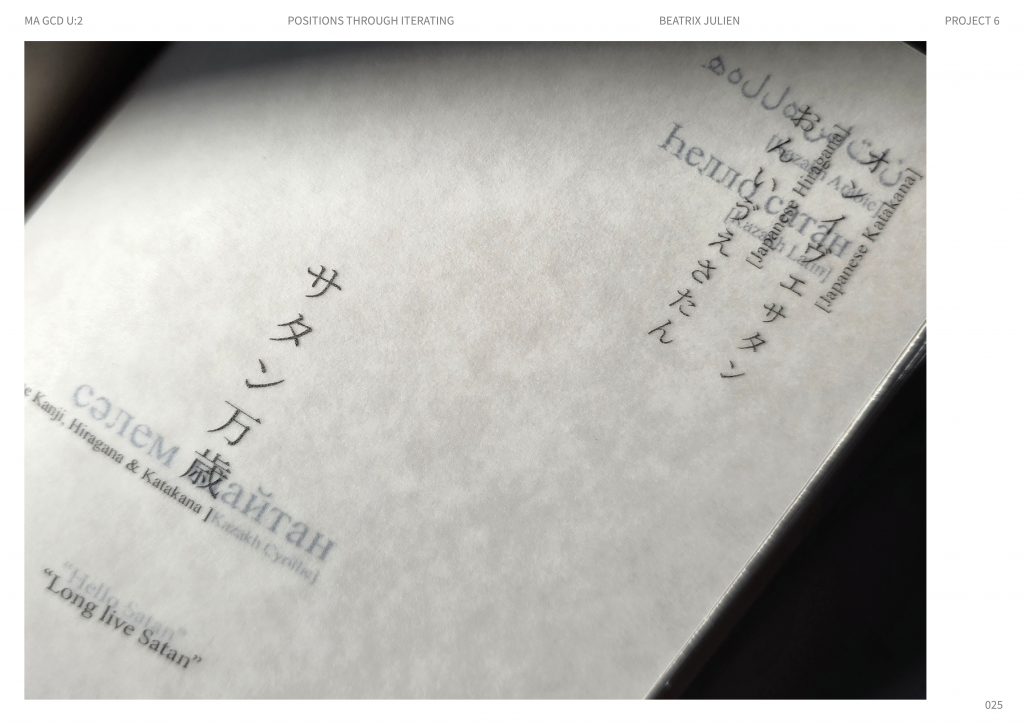
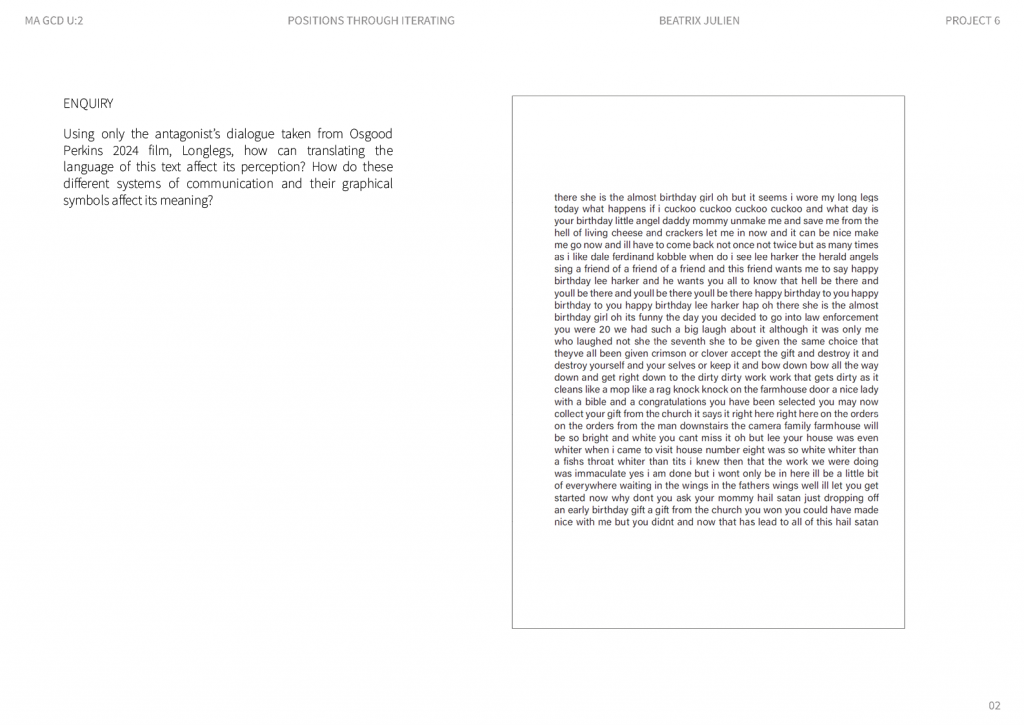
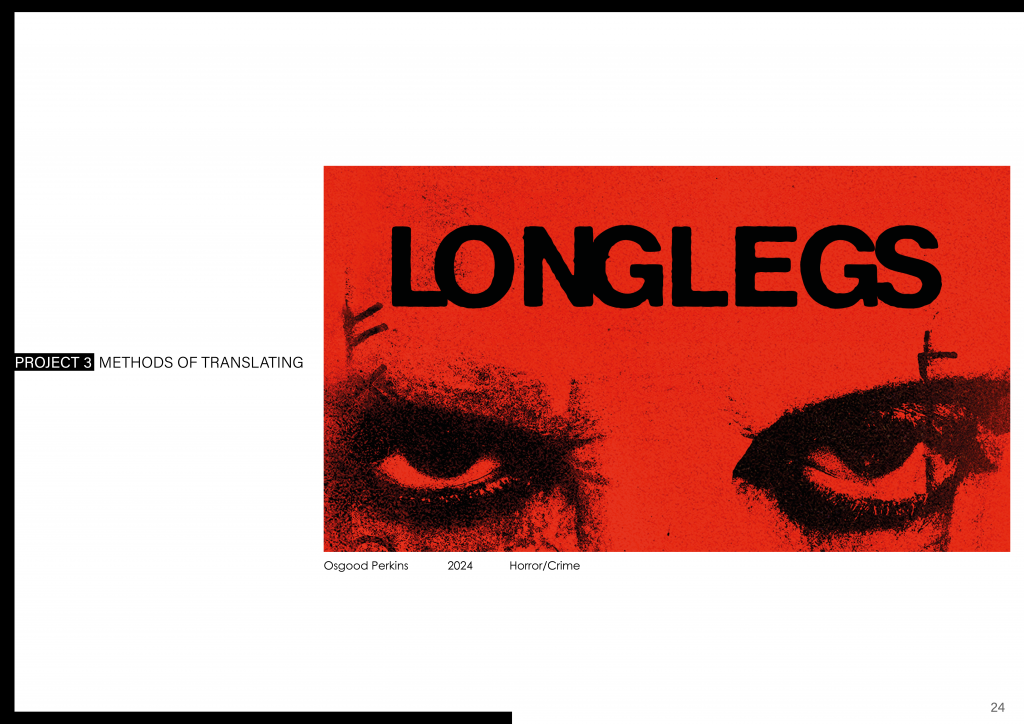
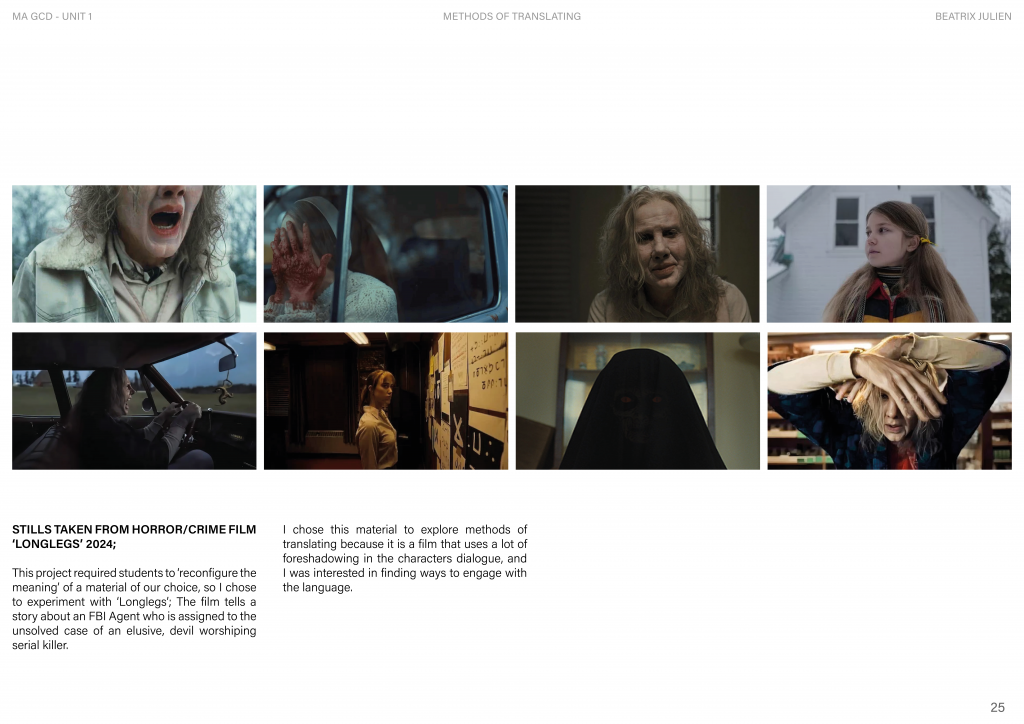
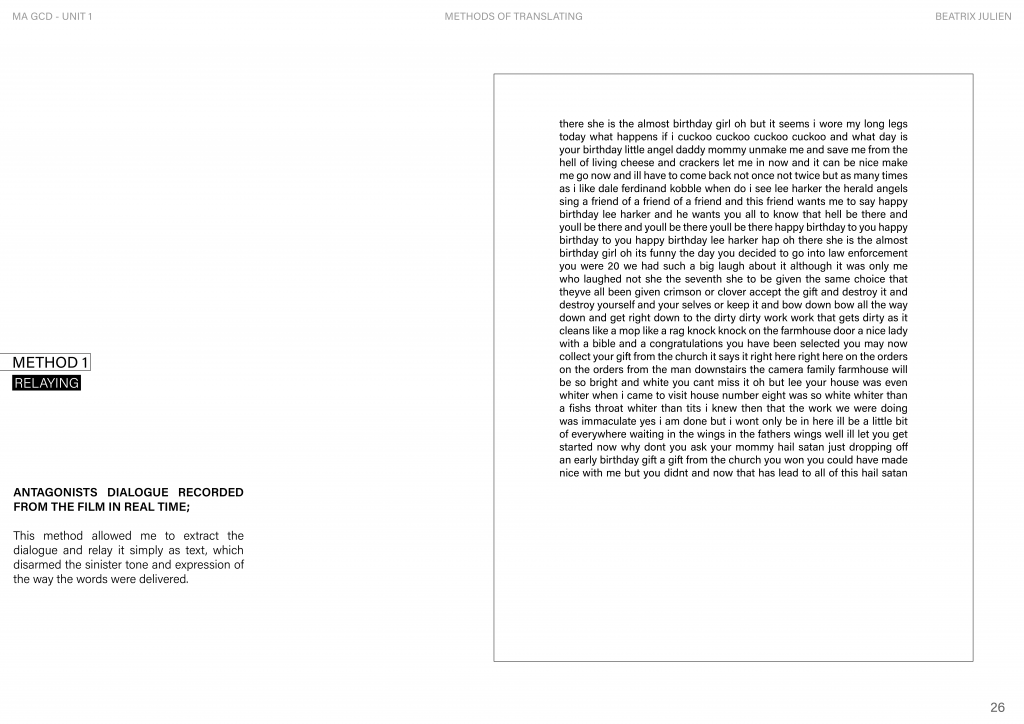
The first round of iterations involved translating the dialogue into 100 different languages to see how these different writing systems presented the original text.
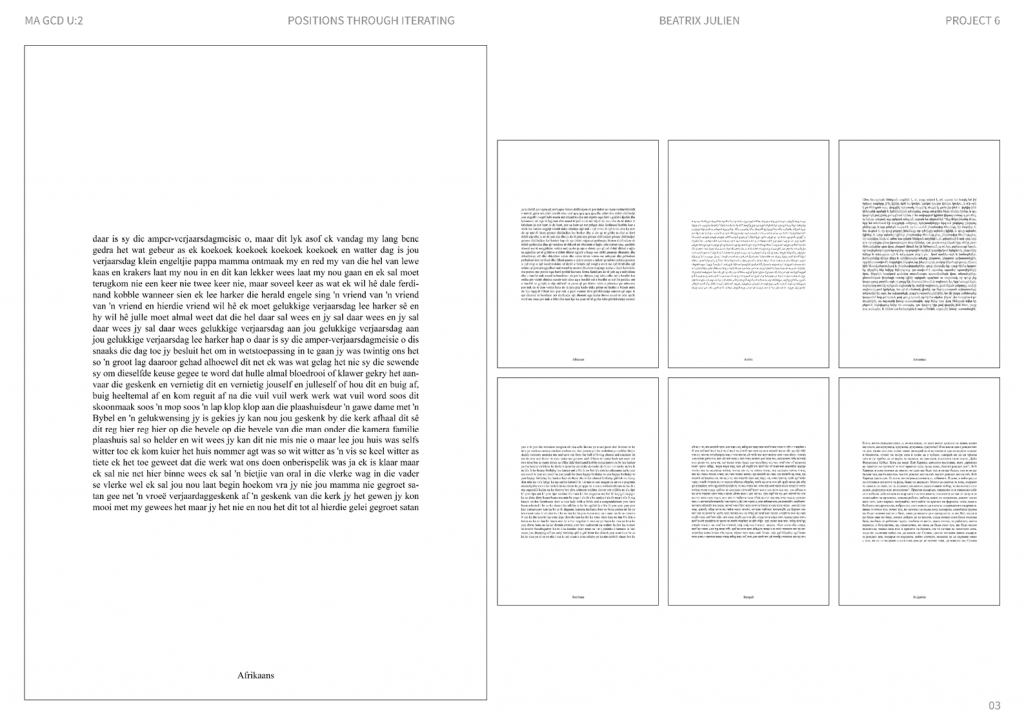
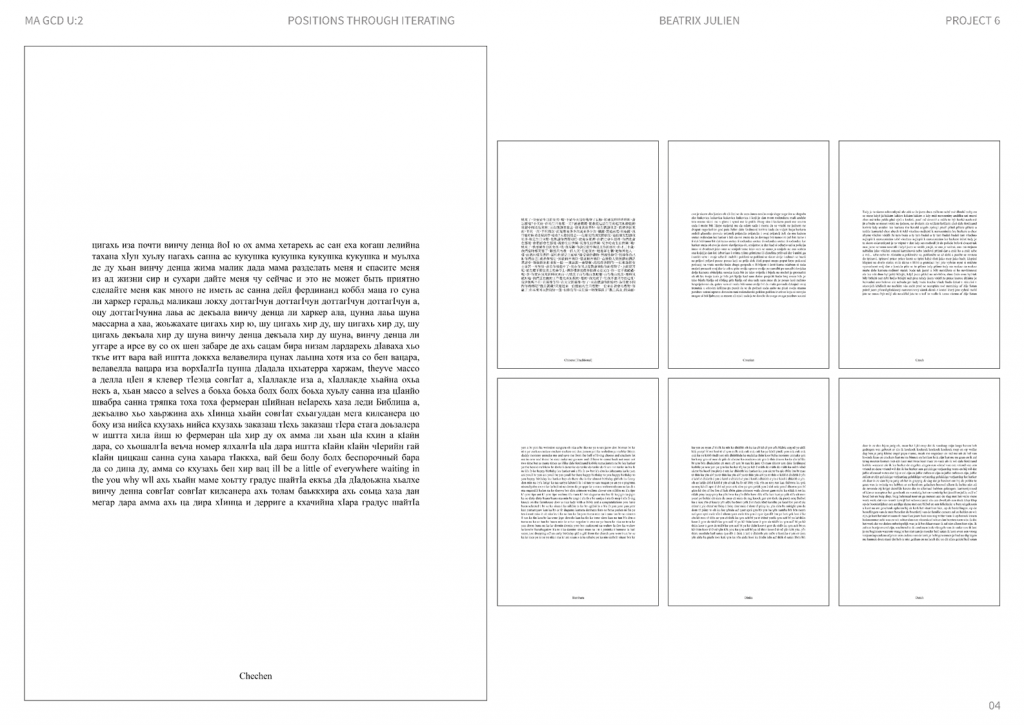
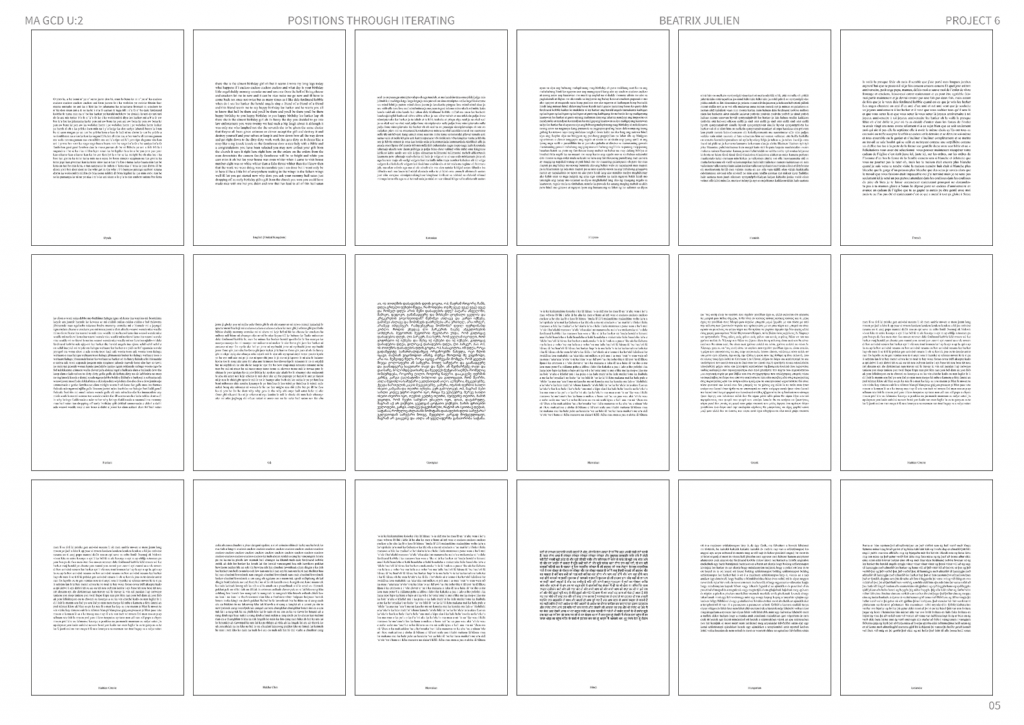
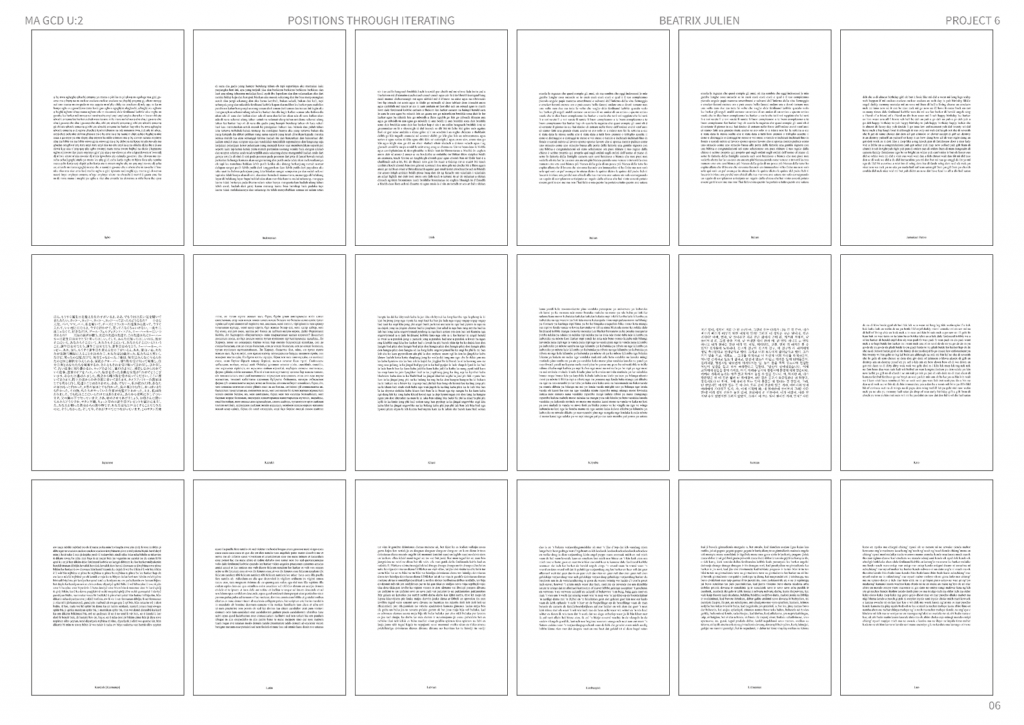
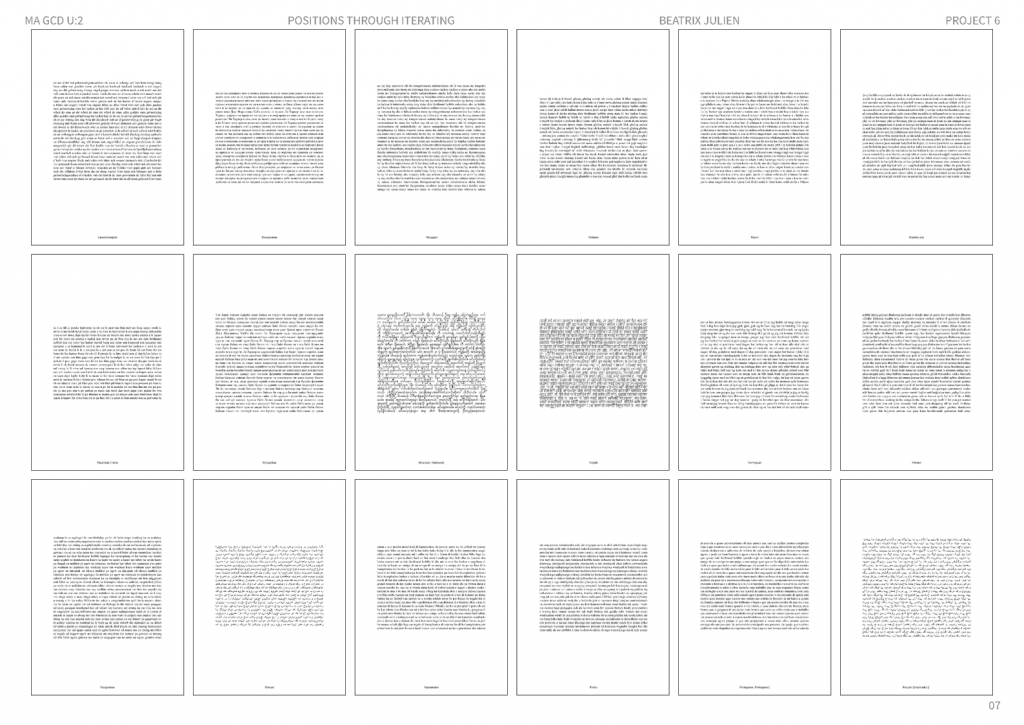
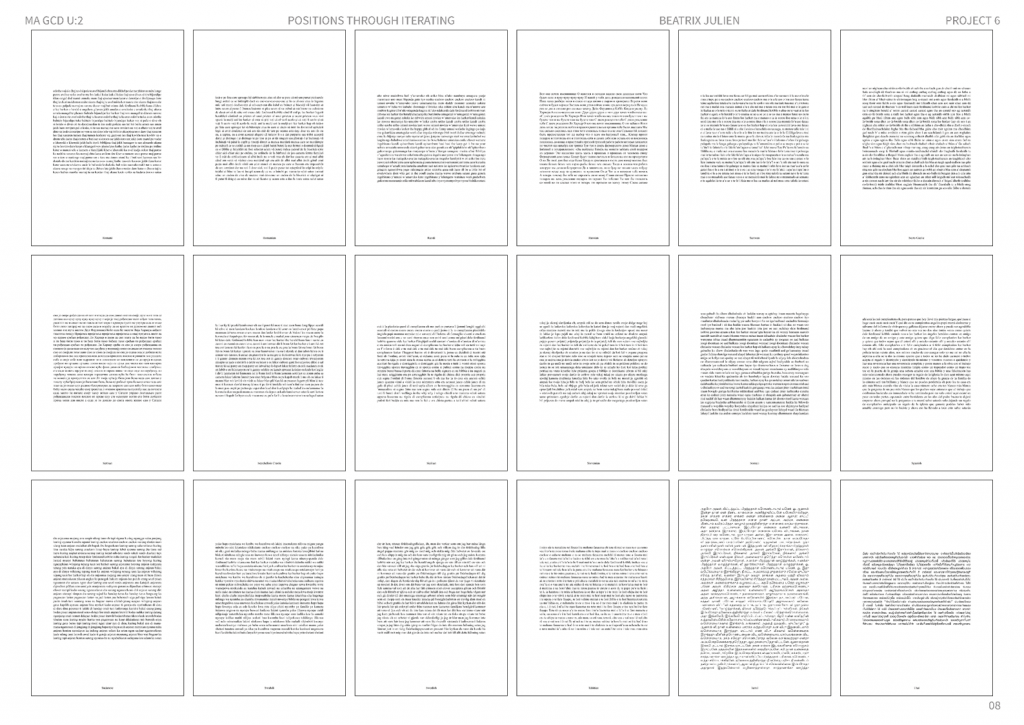
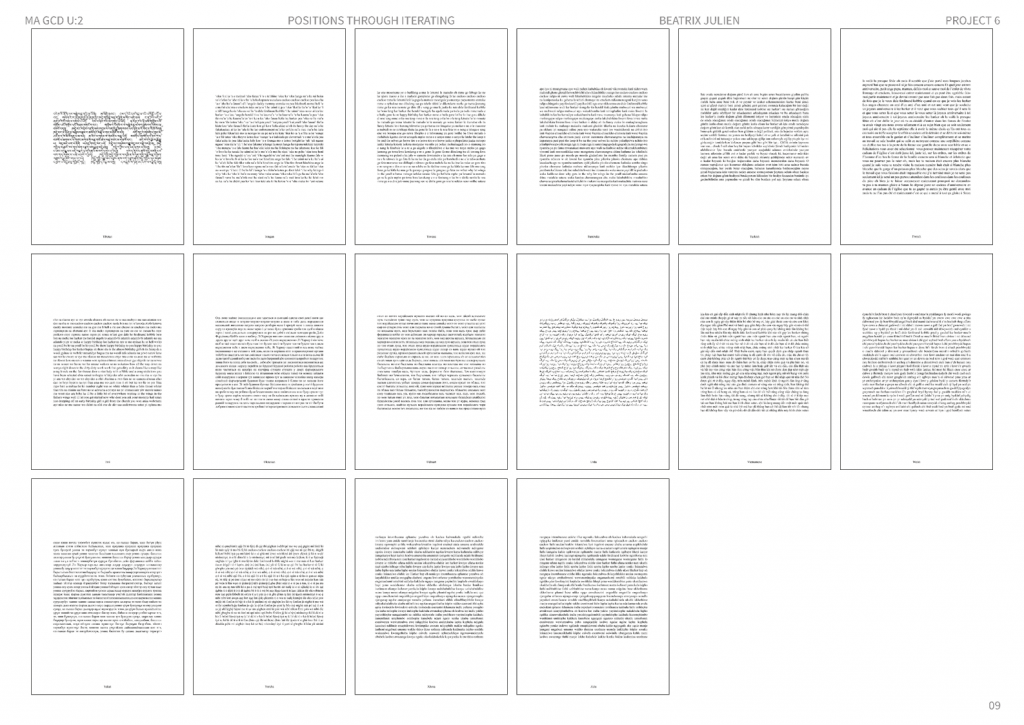
The 100 page publication was printed on 112gsm tracing paper, so that viewers were able to compare one text to another when they were overlayed.
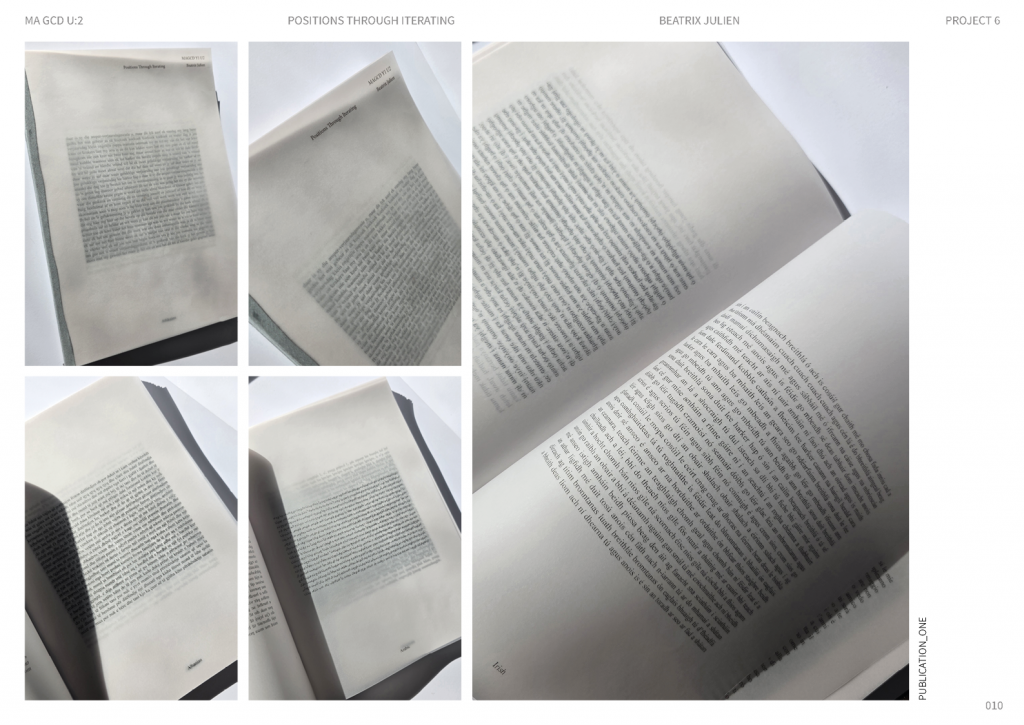
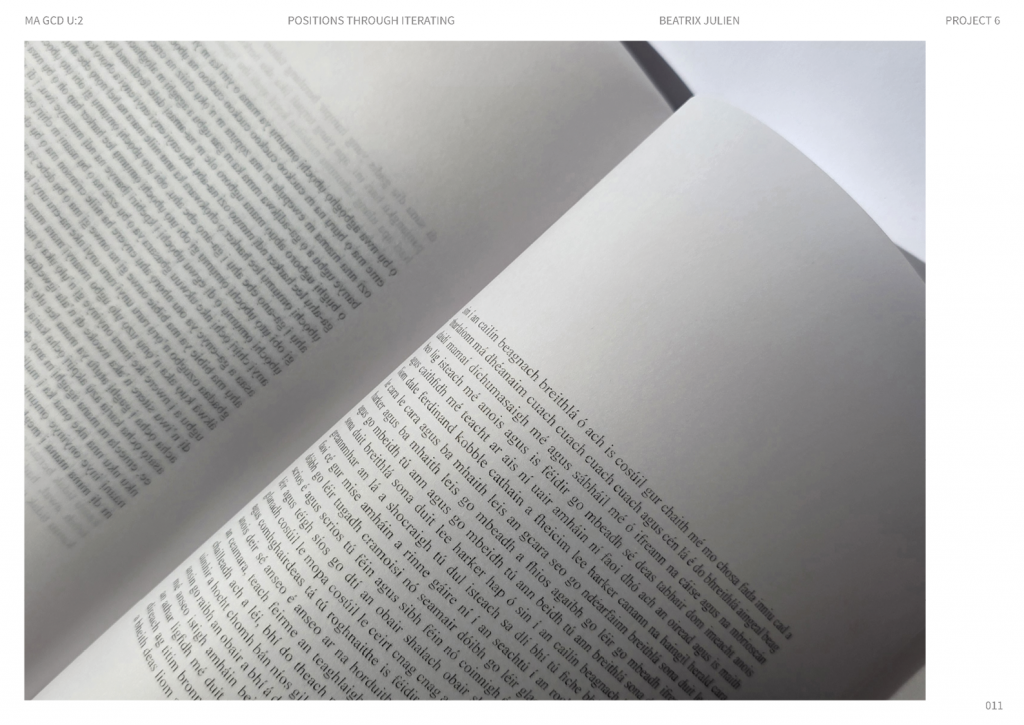
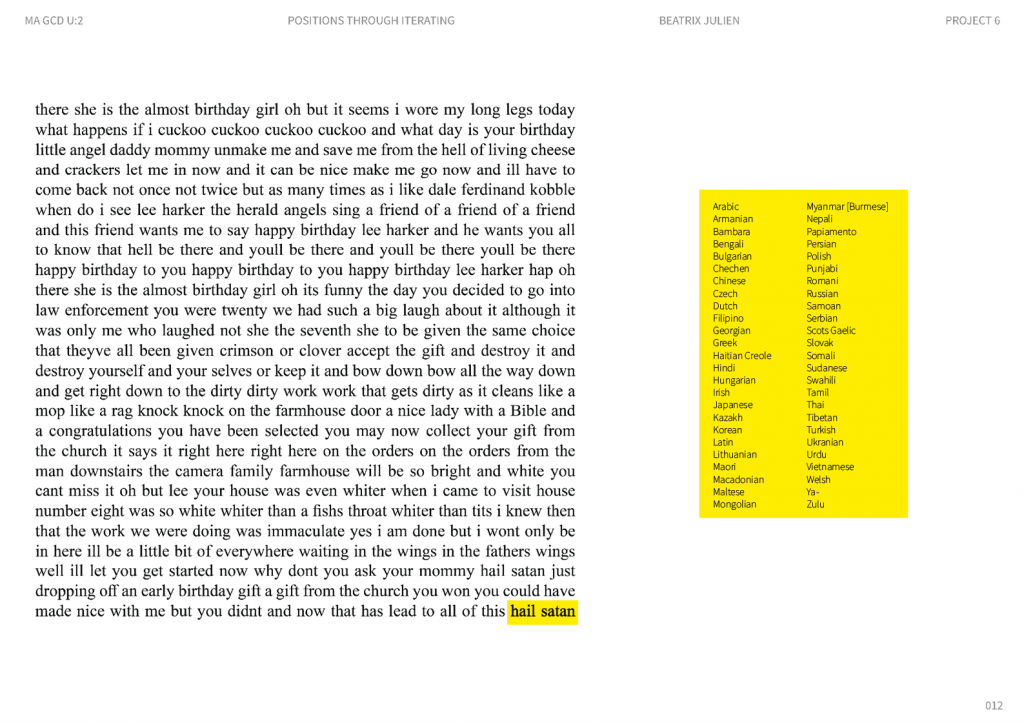
For the second round of iterations, I selected a single phrase from the block of dialogue to translate back to in to English, in order to see how the different written language systems may have interpreted and/or interfered with the original text.
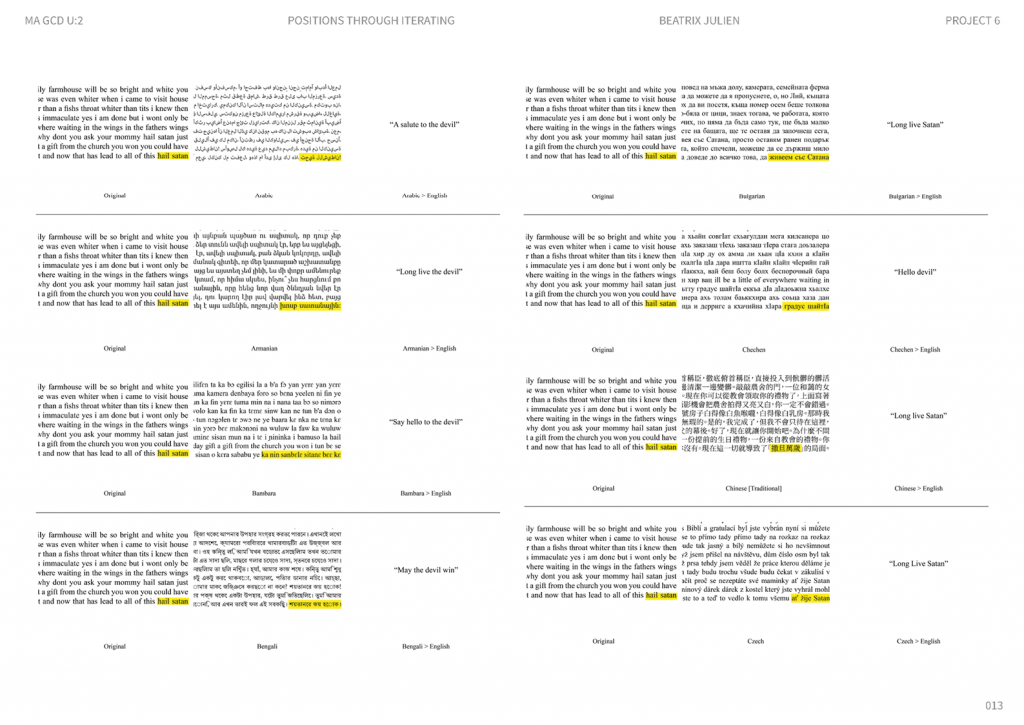
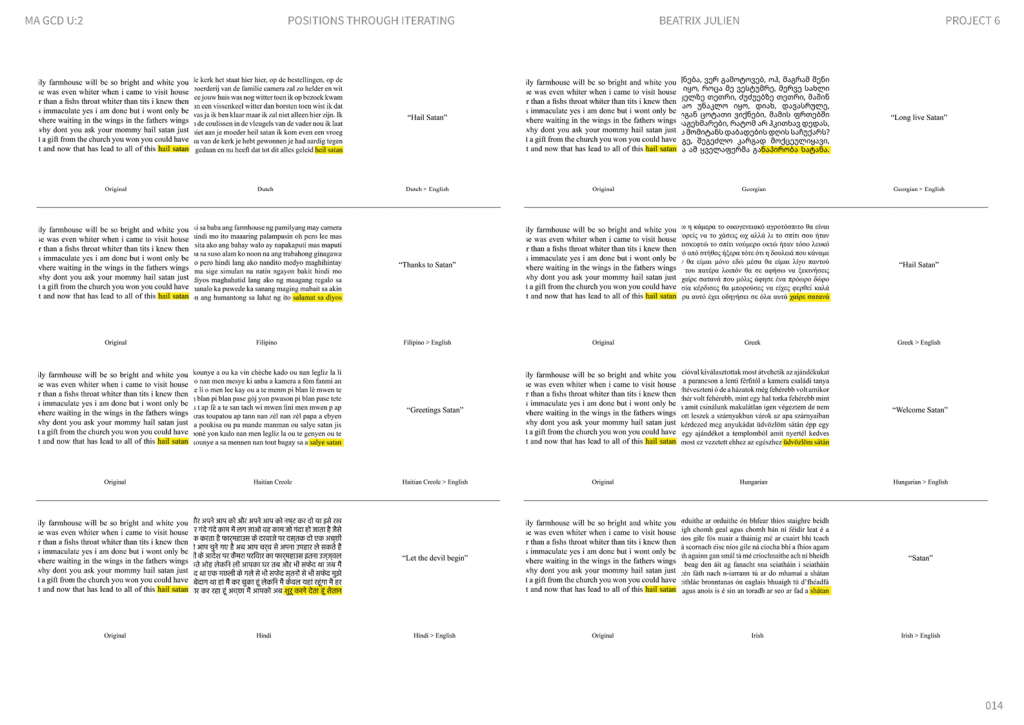
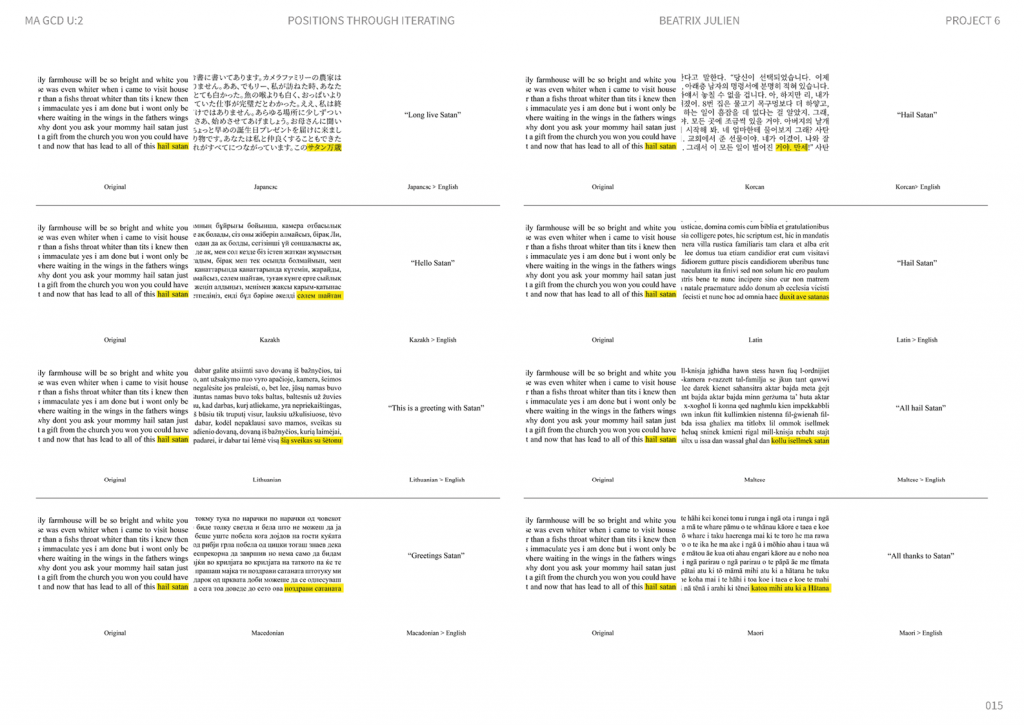
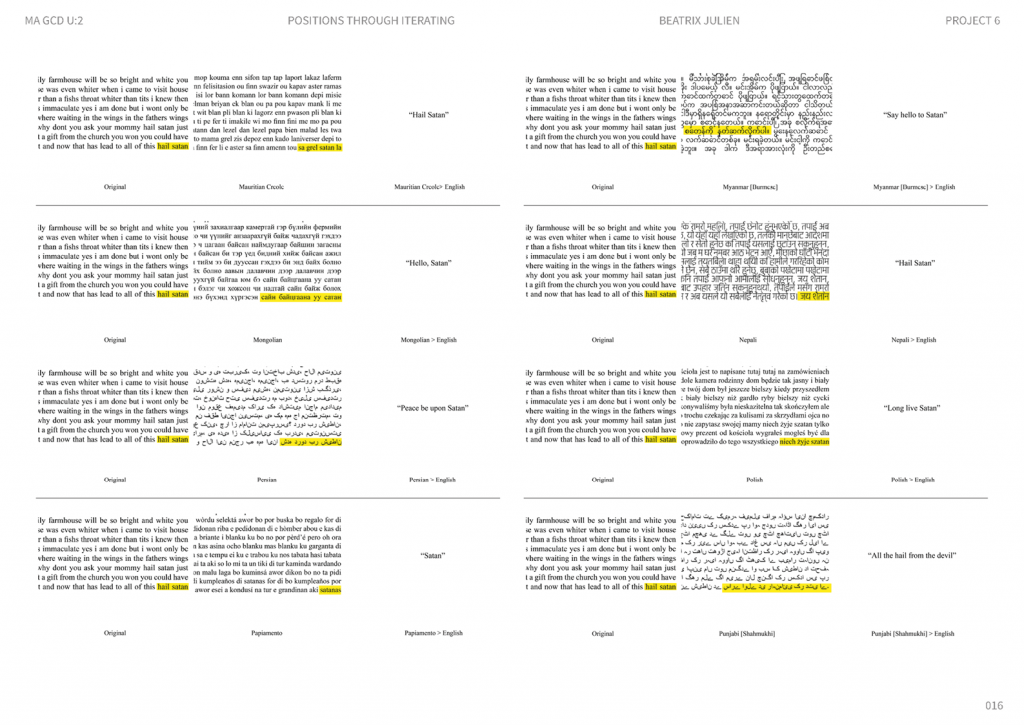
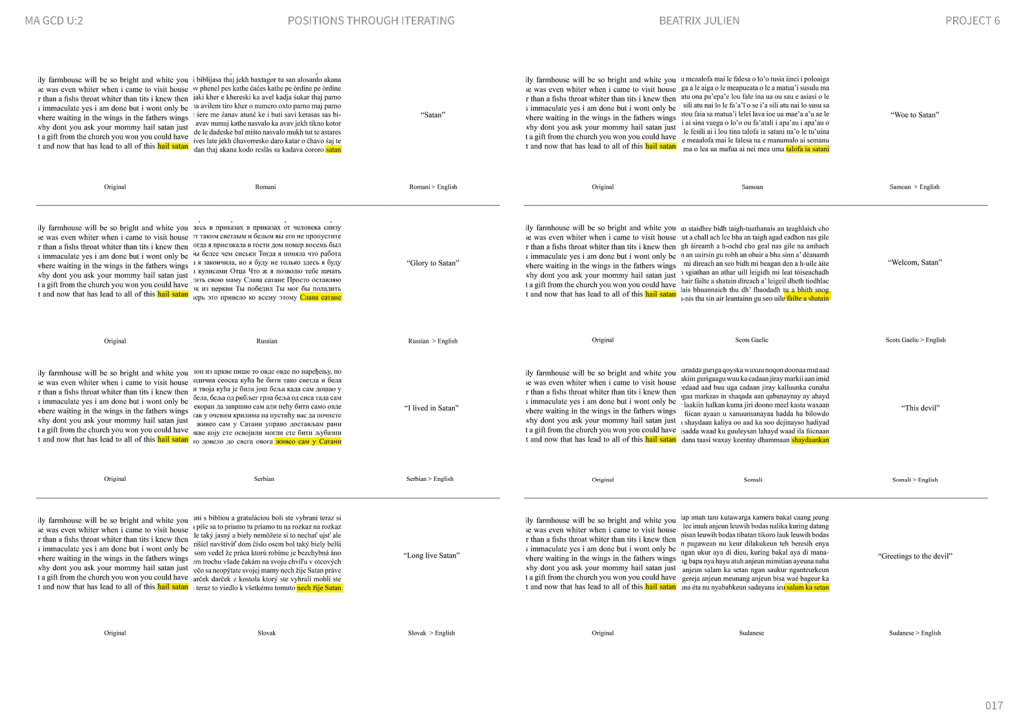
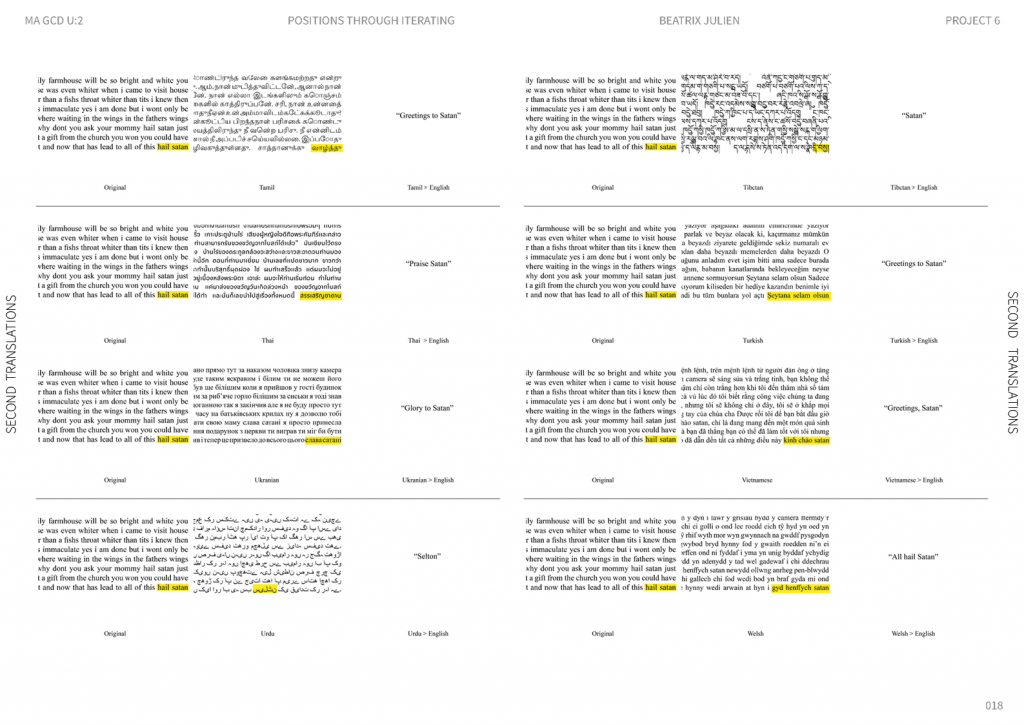
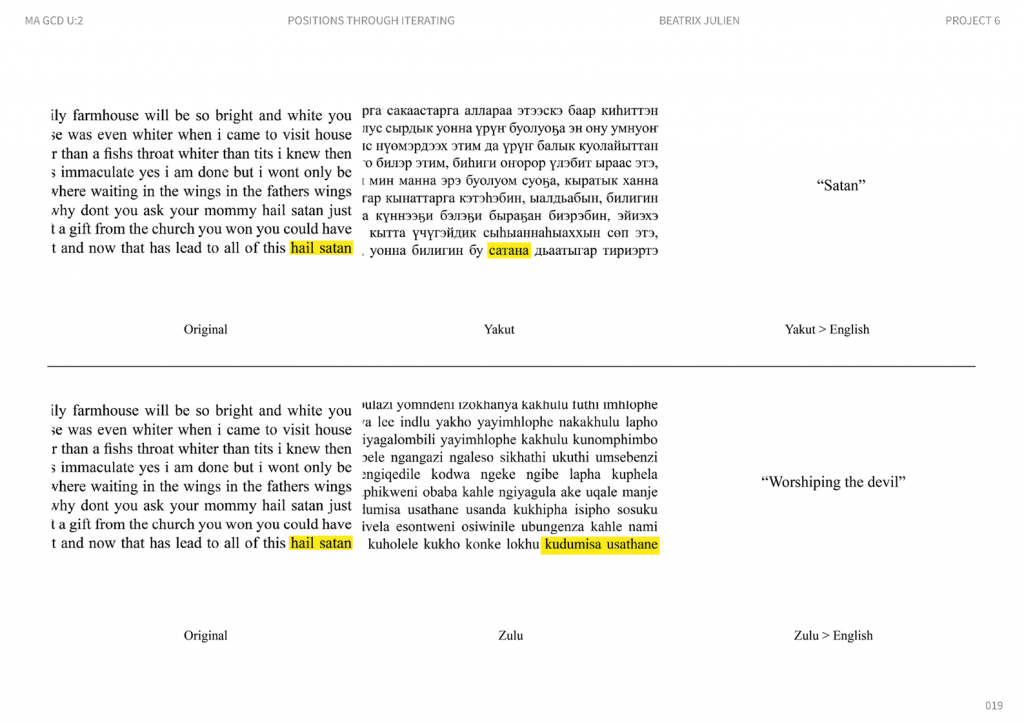
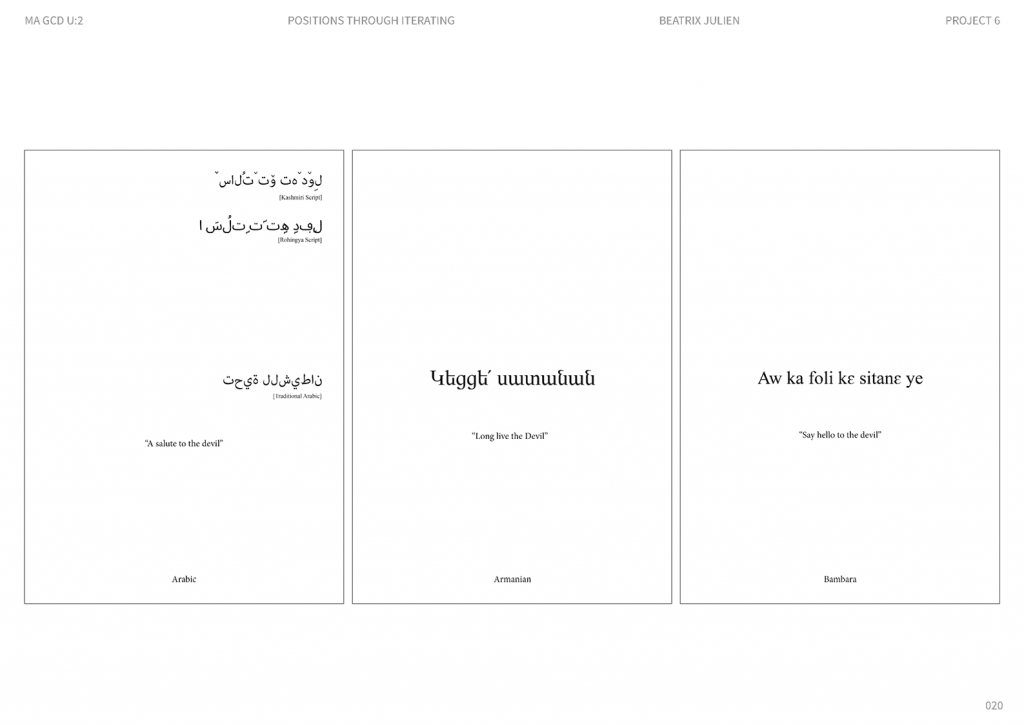
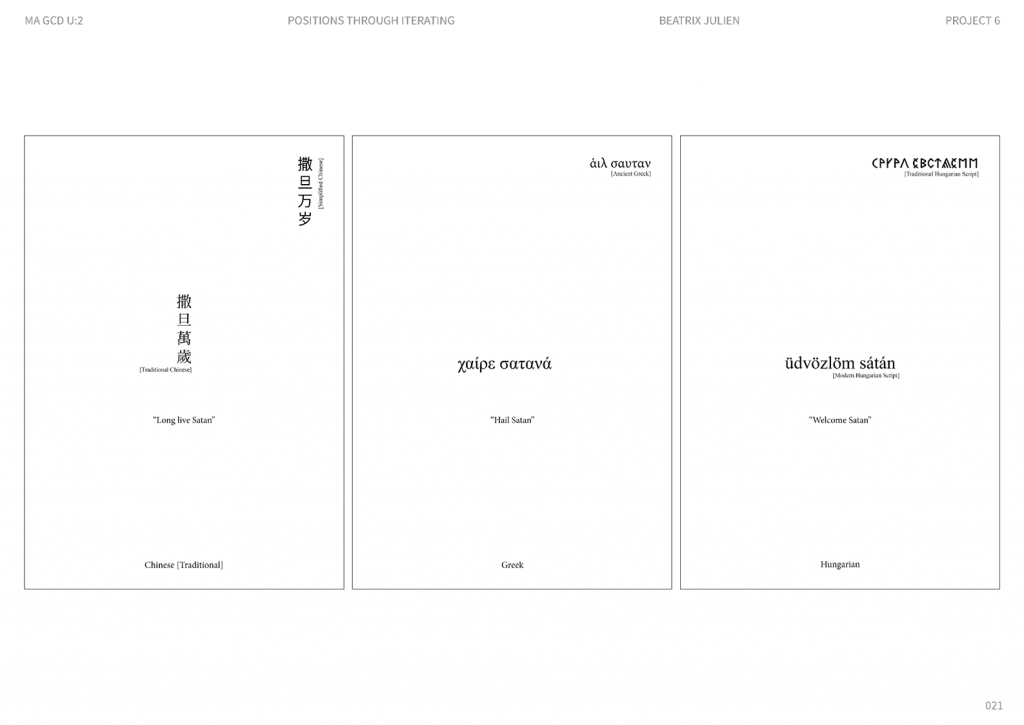
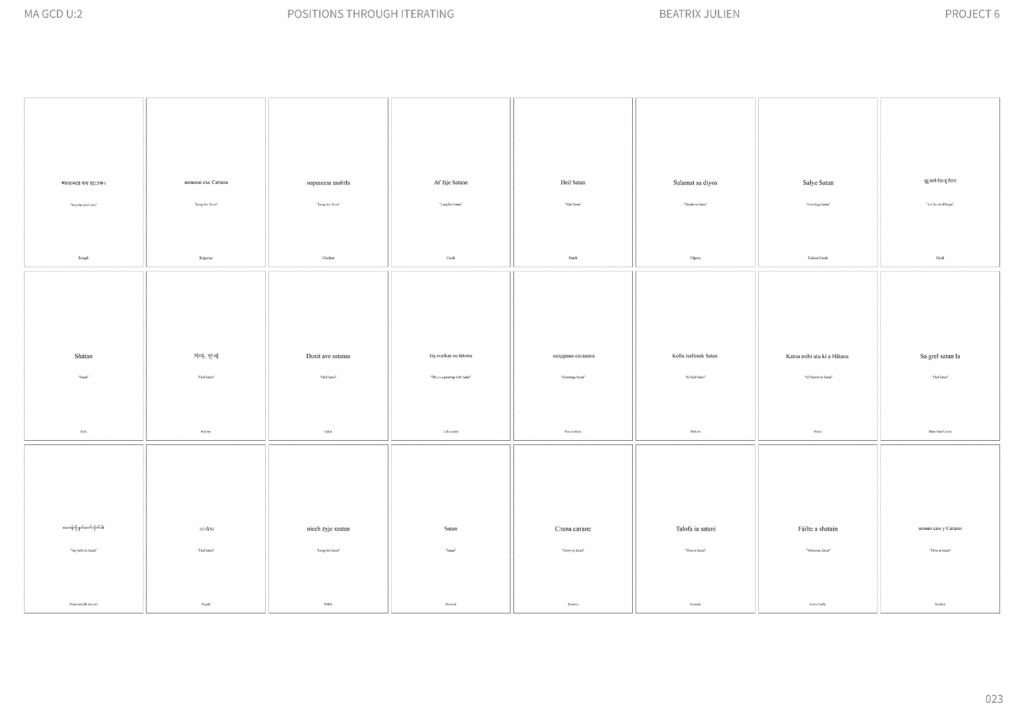
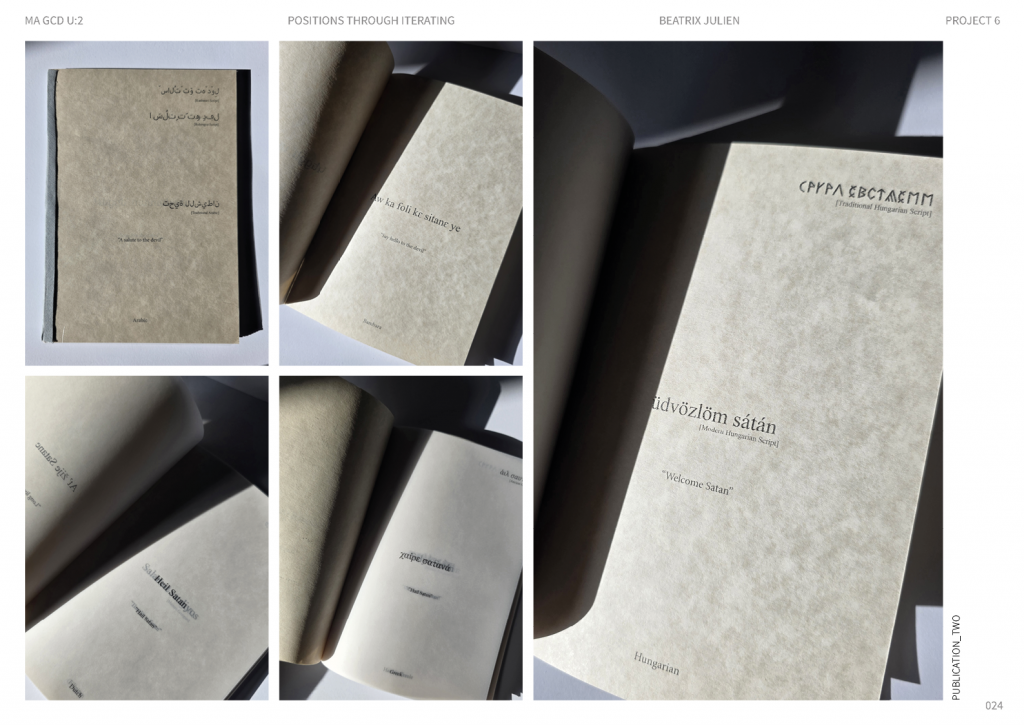
The second publication was printed on a combination of 90gsm tracing paper and vintage parchment paper, in order to highlight or isolate the relative text.
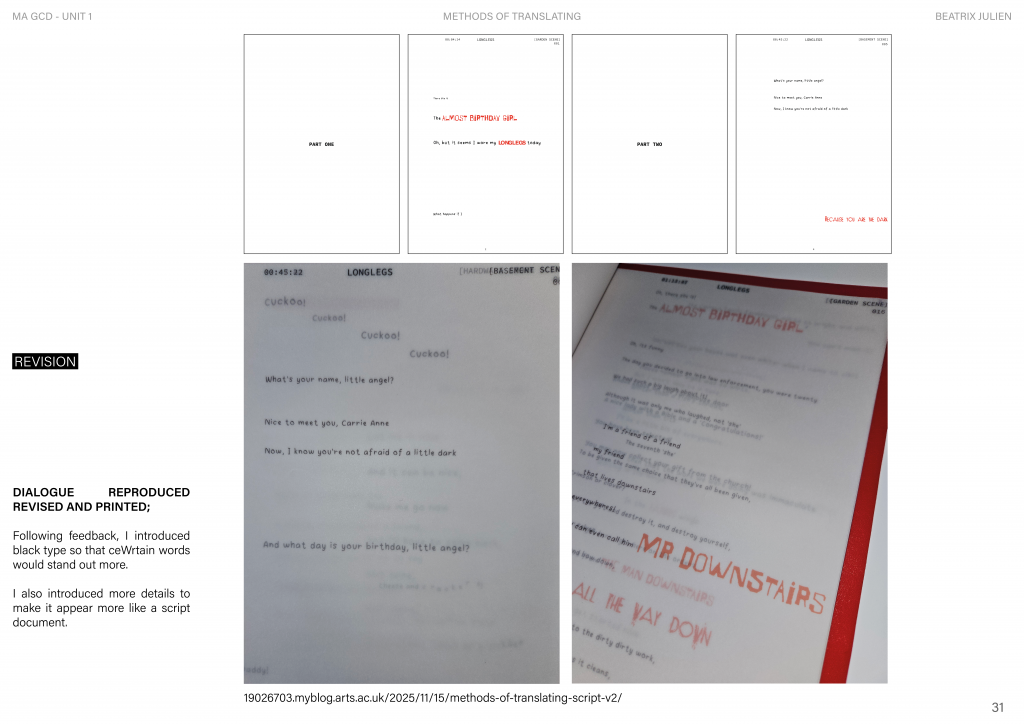
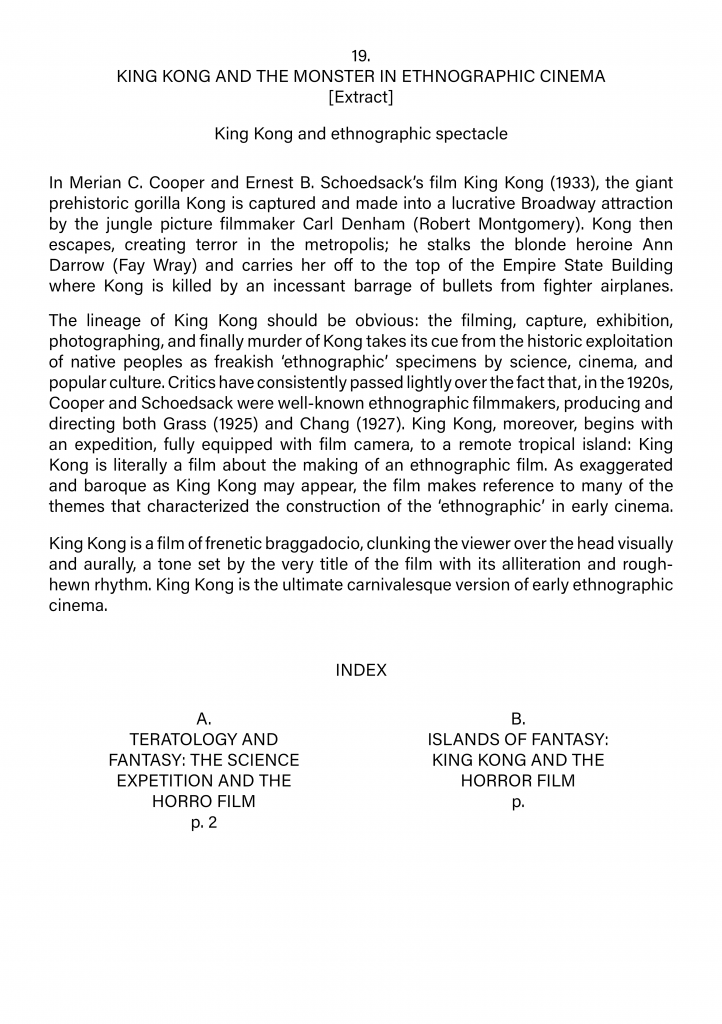
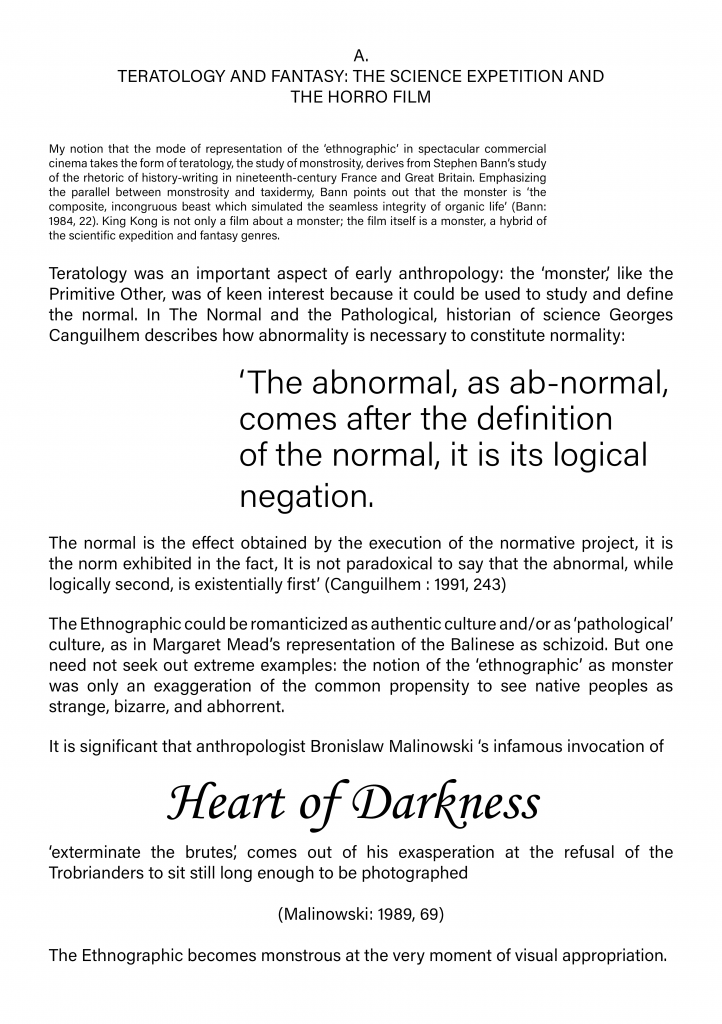
Below you will find my representation of ‘King Kong and the Monster in Ethnographic Cinema’ from Ken Gelder’s, The Horror Reader, using Afanso Mato’s, ‘Who Can Afford To Be Critical?’.
Gelder, Ken ed., (2000) The horror reader, London: Routledge
Matos, A. (2022). Who Can Afford to Be Critical? Set Margins’ Publications.

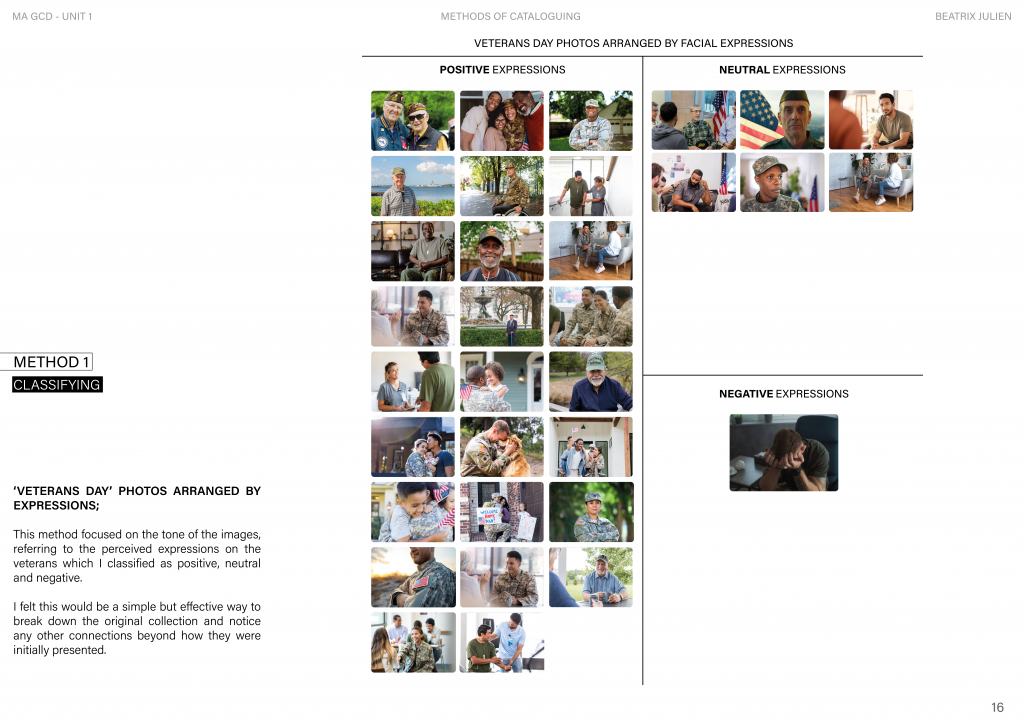
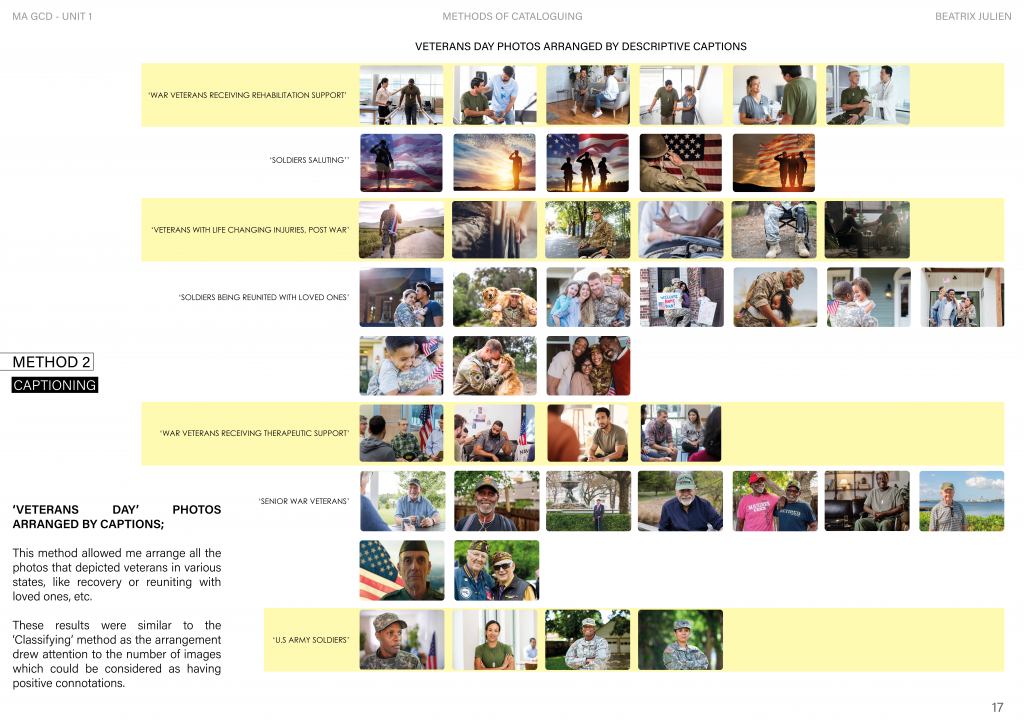
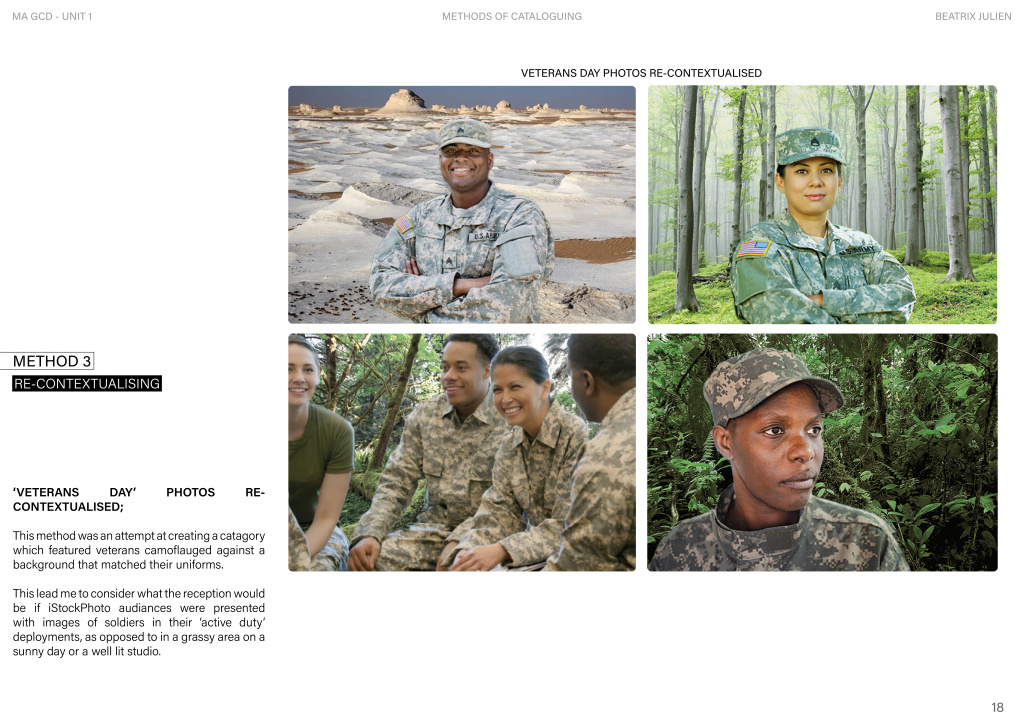
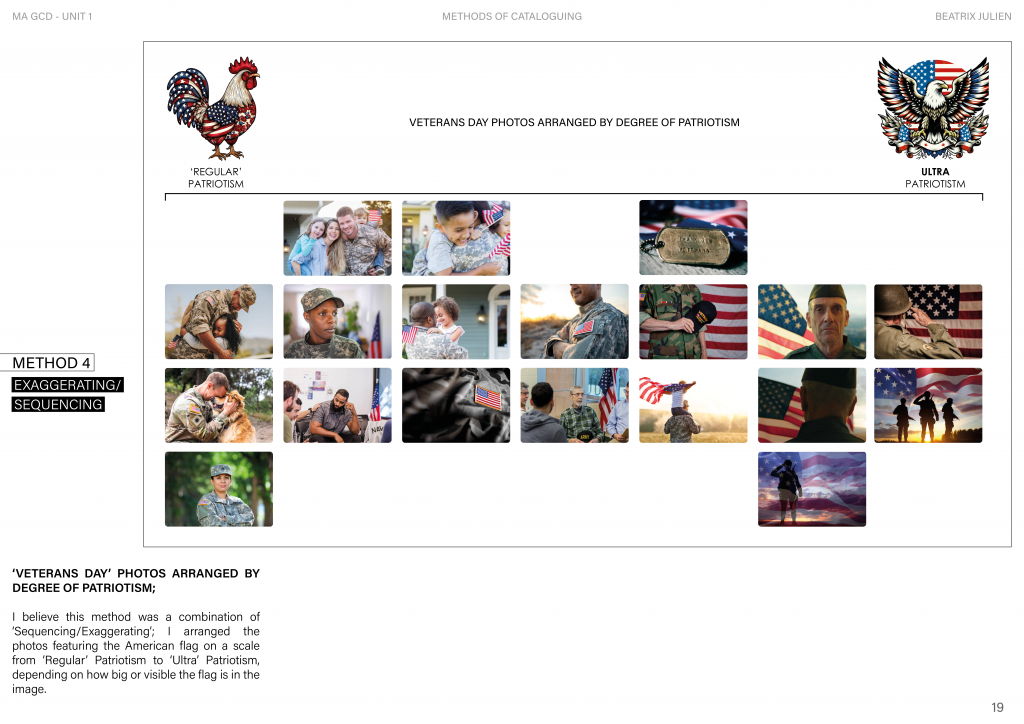
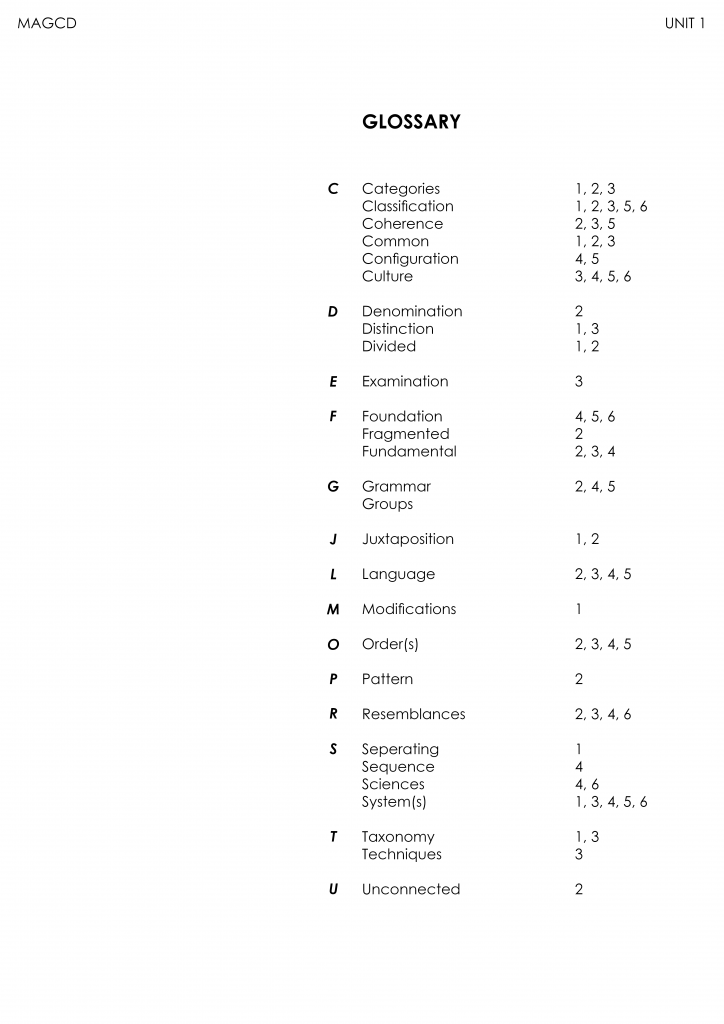
For the ‘Methods of Cataloguing’ project prompt, I chose the preface of Michel Foucault’s The Order of Things: An Archaeology of the Human Sciences [1] as a text to use for the ‘Inventory’ method. I selected this text because I found his views on humanity’s historical desire for order and cataloguing very insightful, and it led me to consider how we’ve decided which systems are useful and which are redundant, and what kind of system I would use to re-organise this text.
Due to the academic nature of the book, I decided that I would create a glossary which could provide information on where to find references to key terms throughout the six page PDF document. I believed that this would be an appropriate method because Michal Foucault’s book, this segment in particular, read to me like a specialty piece of information from the technical language he used. This could suggest that the demographic of readers have an interest in this subject in particular, and could find use in a system like a glossary.
I also chose to create a glossary because since beginning this project of cataloguing methods, I have grown aware of a particular language used to explain the process of categorising items, such as ‘grammar’, ‘classification’ and ‘sequences’. These terms are synonymous with creating order because they’re also recognised identification methods that we use to aid our ways of cataloguing, and help us to recognise what is relative and what is uncomparable.
This project has required me to re-evaluate my initial thoughts surrounding cataloguing; It was something that I considered to be fairly straightforward and no more than a means for reference, however, after analysing examples and attempting to arrange my own catalogues, I understand that it can be a complex process which often needs to translate well. A thoughtfully arranged catalogue is contextual, has a clear purpose, and is presented in an appropriate format which corresponds with the topic.
[1] Foucault, M. (1966). The Order of things: an Archaeology of the Human Sciences. London: Routledge.

Before reading the excerpt ‘The Street’ from Georges Perec’s, ‘Species of spaces and other pieces’, I believed that I knew how to look at things, how to observe things. Tasked with applying a systematic method of investigating some aspect of a physical site, I chose Dalston Junction; A literal junction in Hackney, East London, connecting four main roads, Dalston Lane, Kingsland High Street, Balls Pond Road and Kingsland Road. I’ve been familiar with that particular space for most of my conscious life, but only at face value, so it seemed like the perfect place to exercise a few methods of investigation.
The first visit was made on a weekday in the early afternoon when it was quiet, with very little traffic on the streets and the pavements. I was able to observe this chosen area from a window seat in the Crown & Castle, the pub situated on one of the four corners of Dalston Junction, and began a series of brief note taking, photography and sketches; The aim was to establish what and where my physical site would be using photos of the buildings and the streets they were on, a few general notes about the area at the time and a few sketches of the architecture.
I was able to read Georges Perec’s excerpt between the first and second visit to the Junction, and I considered ‘The street’ to be an intriguing piece on dissecting the method of observation; His instruction to take notes of everything that you can see, specifically ‘what is of no interest, what is most obvious, most common, most colourless’, was something that I wanted to take quite literally. This was a new approach for myself and not one that I had attempted before, but I believe that I understood the premise and saw how this type of practice could reveal a multitude of details that might otherwise go unnoticed.
The idea of noting everything I see, ‘almost stupidly’, spurred me into wanting to be more thorough with my methods of investigation; To take more pictures, to produce more detailed notes and fill a page with sketches, so I did just that on my second and third visit to the Junction.
Being present at different times of the day allowed me to see how this affected the people, traffic and buildings within that chosen space, and I felt most compelled to photograph these differences as they were the most noticeable and visible.

Using these pictures, I assembled a panoramic collage featuring all the photos I’d taken, aligned in an order that could recreate the space. This panoramic collage came with four images that I’d taken from the Rio Cinema’s Tapes/Archives collection; A book containing images of the Hackney area, taken by members of the community in the 1980s. The past images were essentially ‘puzzle pieces’ for viewers to attempt to match with the present pictures in the collage and an interesting way to see how much, or little, things had changed via these momentary captures in time.

Given the chance to do this project again, I would like to experiment with my findings and make some attempts to incorporate all three methods together, as opposed to only focusing on photography. I would also like to capture the eclectic and diverse atmosphere that I experienced during my visits to the Junction, as I believe that could have made a much more fascinating visual.